

Realising that a relationship does not fit can leave you wondering why you chose it or why you stayed. You may have learned something new, changed your wishes or noticed a pattern that was difficult to see earlier. You do not need to explain the situation as a defect in yourself.
A relationship can offer affection and still leave an important need unmet. Look at what is happening now, what you each want and which choices are available, rather than deciding that another person must make you whole.
On this page
1. Describe the mismatch
Start with something concrete. Perhaps you want an exclusive relationship and the other person does not, you disagree about having children or your everyday responsibilities are consistently one-sided.
Different wishes do not necessarily make either person wrong. They may still matter enough that the relationship is not workable. Try to distinguish a preference you can negotiate from something you do not want to give up.
Also distinguish incompatibility from harm. Threats, coercion, violence or controlling someone’s movements are not simply different relationship styles or evidence that a partner needs more attention.
2. Separate attention from an agreement
Frequent messages, affectionate dates or strong chemistry may feel meaningful. They do not establish that you want the same kind of relationship. Ask about the expectation itself rather than relying on how intense the connection feels.
For example: “I want to date exclusively. Is that something you want?” Listen to the answer, including an answer you hoped would be different. Continuing to date does not require pretending that an important disagreement has disappeared.
Wanting care, company or reassurance does not make you undeserving of a good relationship. The question is whether the arrangement offers the kind of connection you want and leaves room for both people’s choices.
3. Notice patterns without blaming yourself
You might notice that you avoid difficult questions, agree to plans you do not want or wait for promised change for a long time. A pattern can be useful information without becoming a judgement about your character.
You do not have to identify a childhood cause before changing a present arrangement. Earlier experiences may be worth exploring if that feels useful, but an article cannot establish why you chose a particular person.
Keep responsibility with the behaviour
If someone misled, pressured or harmed you, their actions remain their responsibility. Wanting affection, overlooking something or finding it difficult to leave does not mean you asked for that treatment.
4. Discuss what can change
Where it is safe, name one concern and the change you need. “I cannot keep organising every visit. Can we agree how we will share the planning?” gives you something specific to discuss.
Consider both the answer and what happens afterwards. A promise may open a conversation, while a sustained practical change gives you different information. You can decide how long an arrangement is workable for you without inventing a universal deadline.
Allow an honest difference
A partner may not want the future or commitment you want. That answer can be painful without being a challenge to persuade them. The NHS has further reading on relationships, communication and boundaries.
5. Choose support and a practical next step
You might try a clear agreement, stop accepting a particular arrangement, seek individual support or end the relationship. Housing, money, children and caring responsibilities can make those choices complicated; needing help does not make the decision less valid.
If you are afraid of a partner’s reaction, prioritise private support and safety planning rather than a joint exercise or confrontation. A trusted person or appropriate local service can help you consider practical options in your circumstances.
If you choose counselling, you can take a present concern such as “I keep agreeing to things I do not want.” You do not need a diagnosis or an account of hidden damage before asking for help.
A disappointing relationship does not settle your value or predict the next one. Use what you know now to choose a manageable next step, with care for your needs and respect for the other person’s freedom to choose too.
Read the infographic in text
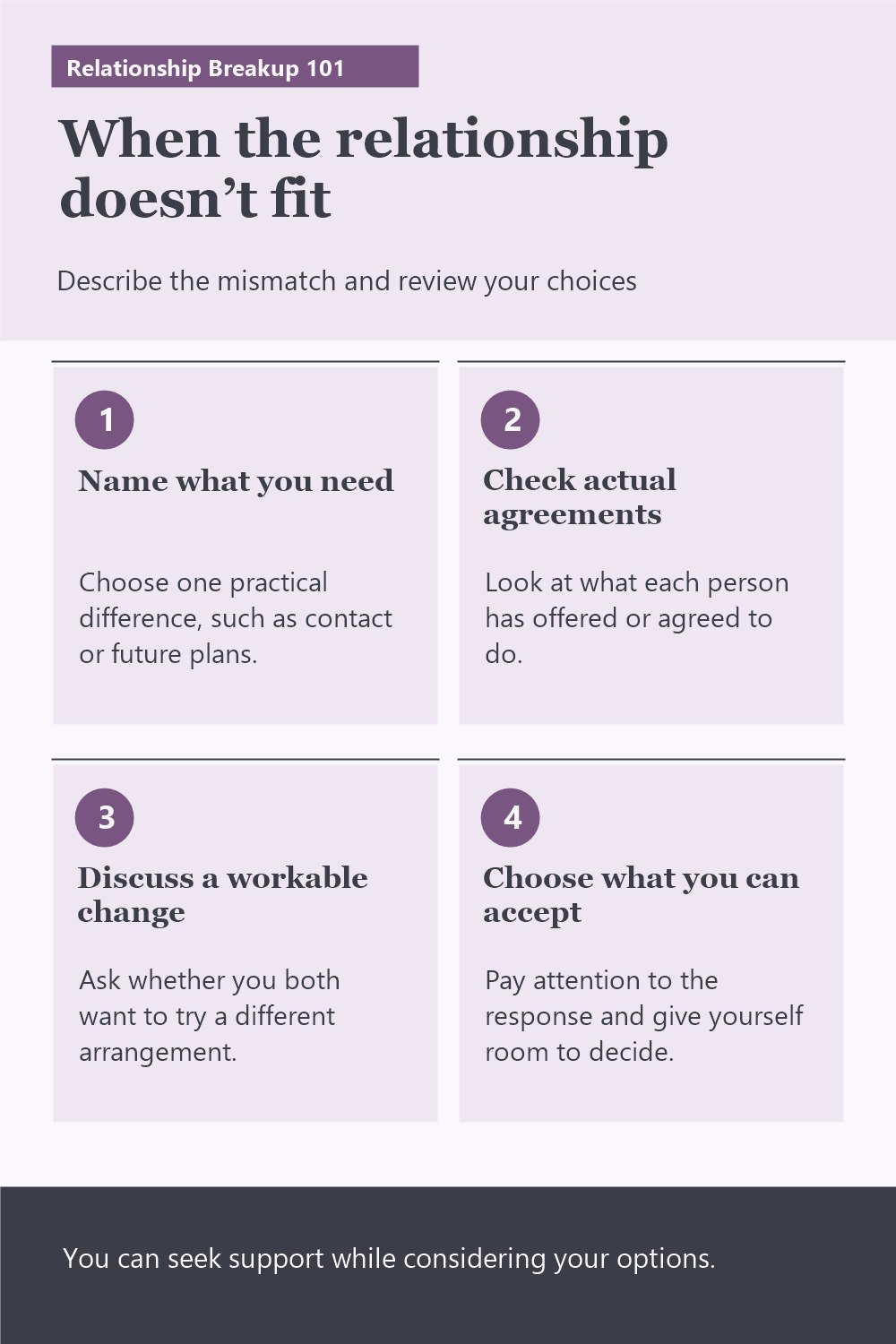
When the relationship doesn’t fit
Describe the mismatch and review your choices
- Name what you need Choose one practical difference, such as contact or future plans.
- Check actual agreements Look at what each person has offered or agreed to do.
- Discuss a workable change Ask whether you both want to try a different arrangement.
- Choose what you can accept Pay attention to the response and give yourself room to decide.
You can seek support while considering your options.