

A relationship can contain affection, shared history and treatment that hurts you. Remembering the good parts does not mean that the harm was acceptable, and feeling attached does not mean that you must stay or return.
You do not have to describe the experience as beautiful, necessary or a lesson you were meant to receive. Start with what you need now: to be heard, to feel safer and to have room to make your own decisions.
On this page

Let more than one feeling be true
You might miss someone, feel angry about what happened and be relieved to have distance. Those feelings can sit alongside each other. You do not need a single, tidy account of the relationship before speaking with someone you trust.
Try separating a memory from the decision it seems to demand. “We had happy times” does not have to become “I should go back.” “I learned something” does not have to become “The hurt was worth it.”
Look at the treatment, not only the intensity
Consider the repeated behaviour: could you disagree, say no, keep contact with friends and make ordinary choices without being frightened or punished? Intensity, passion or a strong reunion does not answer those questions.
The National Domestic Violence Hotline’s warning-sign guidance describes concerns including intimidation, isolation, controlling choices and sexual pressure. If any of these feel familiar, you can seek support without first settling on a label for the whole relationship.
Keep the responsibility for harm where it belongs
You may have choices you regret or things you want to handle differently. That does not make you responsible for another person threatening, humiliating, coercing or hurting you. Their behaviour is theirs to address.
It can be difficult to leave or stay away from someone you care about. Practical needs, fear, shared responsibilities and affection can all complicate a decision. The Hotline discusses why leaving can be complicated without blaming the person experiencing abuse.
Let your beliefs support your choices
Prayer, reflection or a trusted spiritual community may be sources of comfort. You can draw on them without interpreting suffering as a duty, a test you must endure or proof that a relationship is destined to continue.
Choose support that respects your safety and judgment. If someone responds by dismissing the harm or pressuring you to forgive, reconcile or keep a secret, you can seek help elsewhere. You do not have to abandon your beliefs to set a boundary.
Choose practical support that fits your circumstances
If possible, speak privately with a trusted person or a specialist service. You might ask for something specific: company at an appointment, help thinking through transport, a place to rest or someone to check in with you.
If you fear a partner’s reaction, consider a safety plan before a confrontation, meeting or change in contact. The US Hotline offers personal safety-planning guidance; use an appropriate local domestic-abuse service elsewhere. Consider a safer device or place to seek help if your communications may be monitored.
Give recovery room to be ordinary
You do not have to turn the experience into a transformation story. For now, progress might mean eating something, getting some rest, handling one practical task or reconnecting with a person who respects you.
If distress is affecting your sleep, work or ability to manage daily life, consider a healthcare professional or suitable counselling support. You can ask for help without promising forgiveness, a new relationship or a deadline for feeling better.
Read the infographic in text
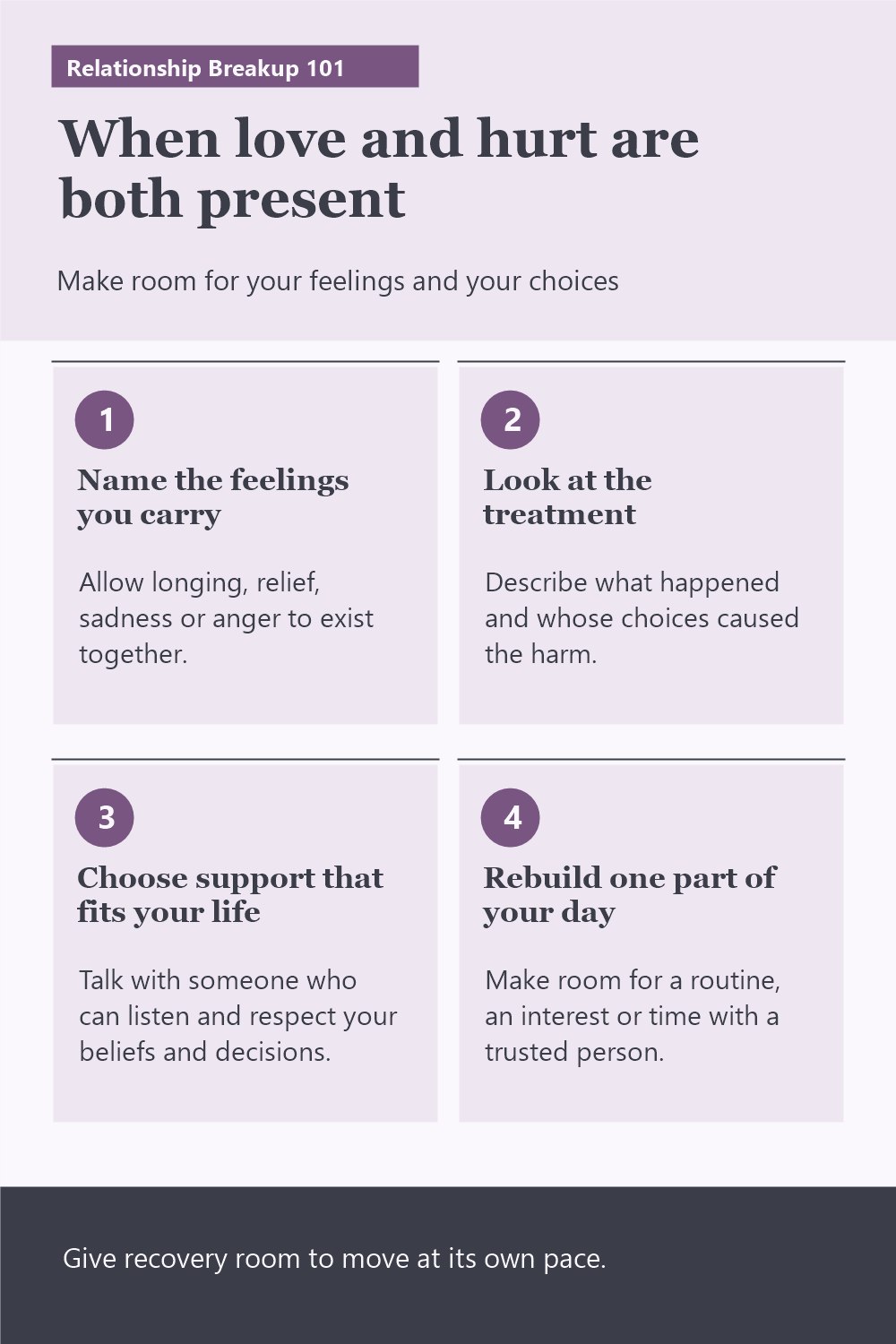
When love and hurt are both present
Make room for your feelings and your choices
- Name the feelings you carry Allow longing, relief, sadness or anger to exist together.
- Look at the treatment Describe what happened and whose choices caused the harm.
- Choose support that fits your life Talk with someone who can listen and respect your beliefs and decisions.
- Rebuild one part of your day Make room for a routine, an interest or time with a trusted person.
Give recovery room to move at its own pace.