

Staying single can be a choice you make for now or a life you want for the long term. You do not need to be especially independent, completely happy or certain about the future to choose it. A romantic relationship is one possible part of life, rather than a requirement for being a caring, responsible person.
You may enjoy being single, wish some parts were easier or feel differently from one week to the next. Those experiences can exist together. Start with what you want and what would make everyday life work better, rather than looking for signs that decide your future for you.
On this page
Choose without passing a personality test
Being annoyed on a date, enjoying your friends’ company or wanting a quiet evening does not establish that you are better suited to single life. Look at the choice itself: do you want to date, pause dating or stop seeking a romantic relationship?
You do not have to describe that preference as destiny. Your values, beliefs, interests or current circumstances may influence it, and you can give them the meaning that fits you. You also do not owe other people a reason they consider impressive enough.
If you are already dating someone, communicate what you can offer rather than assuming they know. For example: “I have realised that I do not want to continue dating.” A change of preference can disappoint someone without making you obliged to stay.

Make room for your preferences and commitments
Consider what you want more room for: rest, work, friends, parenting, study, a faith community or time without scheduled plans. You do not need an ambitious project to justify being single. An ordinary routine you like is enough to matter.
Be specific about the freedom you want
“I want my freedom” can mean different things. You might want control over your evenings, a home arranged to your taste or fewer conversations about shared plans. Naming the preference helps you decide what fits, without treating every relationship as restrictive.
Single people still have responsibilities and may care for children, relatives, friends or others. Choosing not to have a partner does not mean refusing care or commitment. It can mean choosing where your time and energy go.
Work or study can be important without becoming proof that you must remain single. Consider the commitments you actually have and the space you want to keep, rather than ranking career goals against love.
A practical review may help: what do your typical week, budget and living arrangements require? Look for changes that support the life you want instead of trying to make it resemble someone else’s version of independence.
Allow mixed feelings about single life
Choosing to be single does not require enjoying every moment. You can miss affection, dislike attending an event alone or feel relieved to have your own space. One difficult evening does not invalidate the choice, just as one enjoyable date does not require a relationship.
Try noticing what the feeling points to. Do you want company tonight, more physical affection, help with a task or someone to listen? Different needs may call for different arrangements; a partner is not the only possible answer to all of them.
Wanting a relationship eventually does not oblige you to date now. You can also want closeness while choosing a form of connection that does not involve romance. Be clear with other people about expectations and respect their choices too.
If questions from relatives or friends feel intrusive, a short boundary may help: “I am comfortable with my decision, and I do not want introductions or dating advice.” You can repeat it without turning every conversation into a defence of single life.
Build connection and everyday support
Think about the people and arrangements you value. A recurring call, a shared meal, a hobby group or a neighbour you can ask for practical help may fit better than filling every evening with social plans. Choose contact that suits your energy and interests.
You can give and receive care without having a romantic partner. Ask about expectations rather than assuming a friend is always available, and make room for their needs as well as yours. Small, dependable arrangements can be more workable than broad promises.
If you want more company, begin with a manageable invitation. If you need practical support, name the task: a lift, a conversation or help finding a local service. Asking for help does not undermine your independence.
Keep the future yours to decide
Your life does not need a special purpose, a waiting period or a permanent declaration to make being single valid. You can build routines and relationships around what matters to you now.
You are free to keep this preference, reconsider it or leave the question open. Other people do not need to keep you available for a hypothetical future partner. Review your choice when you want to, without treating change or continuity as a failure.
Read the infographic in text
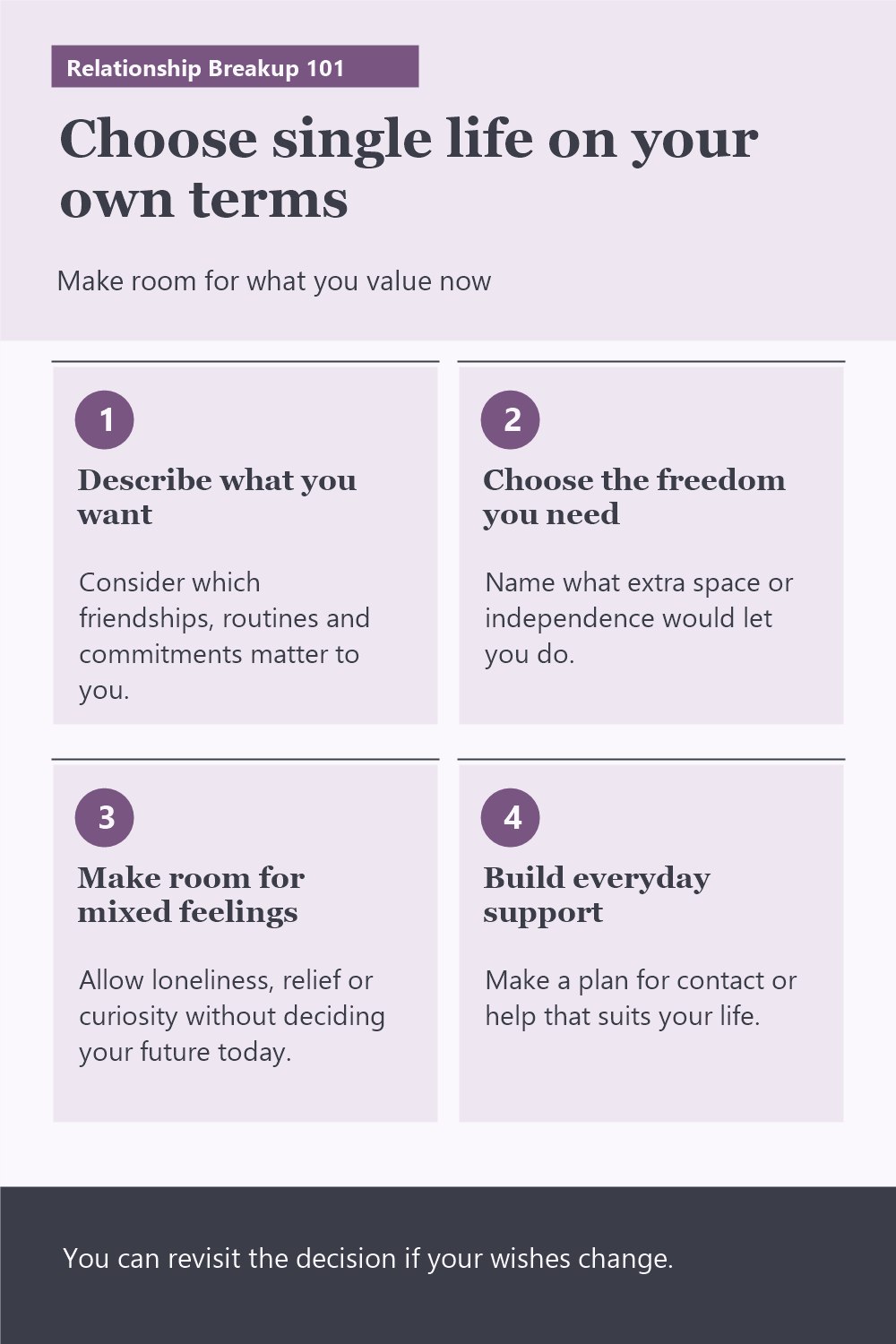
Choose single life on your own terms
Make room for what you value now
- Describe what you want Consider which friendships, routines and commitments matter to you.
- Choose the freedom you need Name what extra space or independence would let you do.
- Make room for mixed feelings Allow loneliness, relief or curiosity without deciding your future today.
- Build everyday support Make a plan for contact or help that suits your life.
You can revisit the decision if your wishes change.