

Feeling stuck can mean several things. You may not know whether you want the relationship, know you want to leave but lack practical options, or feel frightened about the consequences. Naming the difficulty can make the next step more specific.
These questions are for reflection, not a demand to decide immediately. Use them privately if that is safe. You can skip writing things down if keeping notes could put you at risk.
On this page
1. What do I want if I set other people’s expectations aside?
Try describing your own wish in one sentence: “I want to continue with a different arrangement,” “I want time to decide,” or “I want to end the relationship.” You may find that none is quite right yet. That is useful information too.
Notice whose approval you are waiting for. Family, friends or a community may have strong views, but they do not live every part of your relationship. Seek someone who can help you think without deciding on your behalf.

2. What is keeping me here today?
Separate affection and hope from practical barriers such as rent, care or transport. Then name fear separately: fear of loneliness calls for different help from fear that a partner will threaten or hurt you.
Choose the barrier that needs attention first. “I need to find out whether accessible housing support exists” is a more workable task than “I must become completely independent before I can make any choice.” Actual support needs deserve practical answers.
3. Am I trying to protect someone from every painful feeling?
You may want to spare your partner disappointment or avoid upsetting family members. Caring about those feelings is understandable. Ask whether you are also assuming responsibility for making sure nobody ever feels hurt.
Consider what honesty and care would look like within your limits. You can avoid insults, give clear information and handle responsibilities thoughtfully. Those actions do not guarantee a painless breakup, and another person’s sadness does not automatically mean your choice is wrong.
4. What would need to change for me to want to stay?
Name actions you could observe, rather than a general promise that things will improve. Perhaps you need shared work at home, respected privacy or a clearer agreement about commitment. Also ask whether you want to try another arrangement at all.
Where it is safe, an agreement can include a point to review what actually changed. If you fear punishment or retaliation, do not use a review deadline or a new boundary as a test. Individual specialist support may be a more appropriate first step.
5. Which responsibilities need a separate plan?
List shared obligations without treating them as a verdict on whether you must stay together. A lease, debt, parenting arrangement or care need may require advice from someone qualified in your area.
Think about who could provide reliable information. Do not rely solely on a partner’s claim about what you are entitled to or what will happen if you leave. Keep legal and financial decisions distinct from a promise to continue the relationship.
6. Who can help with the next manageable step?
Choose one request matched to your need: someone to listen, help identifying a service, transport to an appointment or a conversation about a safety plan. You can ask for information without committing to a particular outcome.
A next step might be small and still matter. If you are worried about control or threats, the related guides discuss private support and planning. You deserve help while deciding, while staying and after leaving.
Ask a question about one barrier first
If you want time apart but assume you couldn’t afford somewhere else, start by finding out what options exist. You might ask a trusted person whether they know of somewhere you could stay, or find out which local service advises on housing.
If fear or monitoring makes it difficult to explore the choice, consider reaching out privately from a safer device or place. You can ask about options without making a decision in the same conversation.
Read the infographic in text
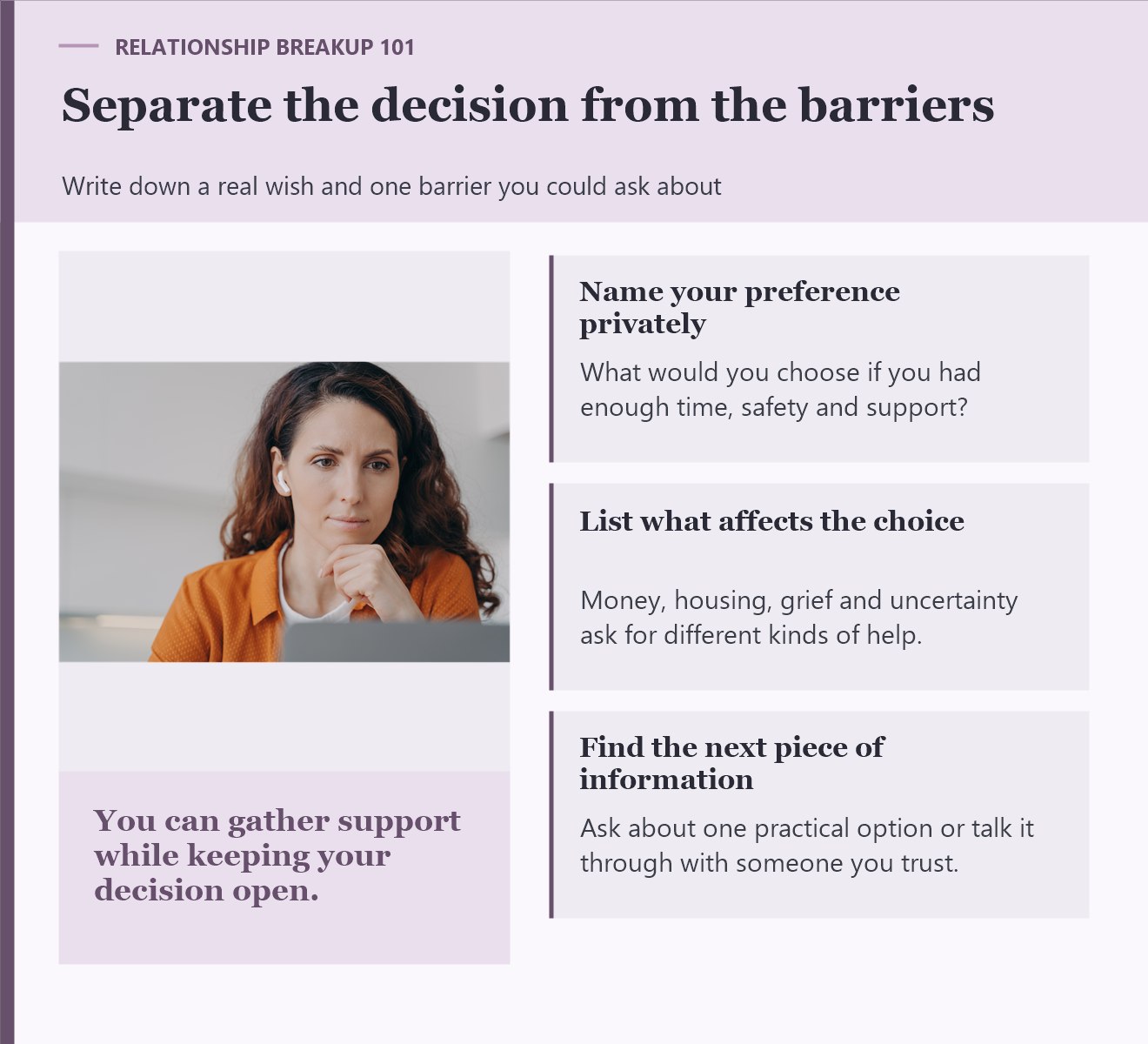
Separate the decision from the barriers
Write down a real wish and one barrier you could ask about
- Name your preference privately What would you choose if you had enough time, safety and support?
- List what affects the choice Money, housing, grief and uncertainty ask for different kinds of help.
- Find the next piece of information Ask about one practical option or talk it through with someone you trust.
You can gather support while keeping your decision open.