

A difficult disagreement does not by itself identify a relationship as emotionally abusive. Equally, an absence of physical violence does not establish that a relationship is safe. Look at what happens when you disagree, set a limit or make an independent choice.
These questions can help you describe your concerns. They are not a diagnostic test, and there is no score you must reach before asking for support. A single serious threat can matter even if you cannot identify a longer pattern.
On this page
1. What happens during a disagreement?
Can each person describe the issue without being humiliated, threatened or frightened into agreeing? Disagreement about spending or time together differs from insults, intimidation or punishment used to control the other person’s choices.
The National Domestic Violence Hotline’s guidance on handling disagreements respectfully can provide a useful reference point. Communication techniques do not make you responsible for stopping another person’s abusive behaviour.

2. Are you free to say no?
Think about everyday limits: declining sex, keeping time with a friend, choosing clothing or asking for privacy. You should not have to agree out of fear of retaliation. Affection and reassurance do not create an entitlement to your body, passwords or constant availability.
Notice whether a refusal is accepted or followed by pressure, monitoring, threats or consequences that make future refusals feel unsafe. You do not have to deliberately test a boundary if you fear the response; existing experiences are enough to discuss with someone you trust.
3. What follows an apology?
A useful apology includes taking responsibility for a specific action without blaming the person who was hurt. It should leave room for the other person to describe the impact and decide what contact or support they want.
Look beyond an intense promise or a brief calm period. Is the behaviour changing consistently, and can you raise concerns without another round of blame? You do not need to establish someone’s private intentions to take the effects of their actions seriously.
4. Can you keep privacy and outside connections?
Concern is different from demanding permission for ordinary activities, reading messages without consent or making contact with friends and family costly. Ask whether your world has become smaller because you are trying to avoid your partner’s reaction.
If your device or accounts may be monitored, consider whether a safer device or private place is available before looking for help. Do not assume that deleting browsing history removes every trace, or make sudden account changes without considering how the other person may respond.
5. Are threats or intimidation shaping your choices?
Threats involving you, children, pets, belongings or the person’s own life deserve attention. You do not have to decide whether a threat is sincere before seeking help. If there is an immediate danger to anyone’s life, contact local emergency support when it is safe to do so.
A threat of self-harm does not make you responsible for remaining in a relationship or managing a crisis alone. Appropriate crisis or emergency services can address urgent risk. For your own safety planning, an abuse support service can help you consider the circumstances without requiring a confrontation.
6. Ask for perspective without having to prove a label
You might tell a trusted person, “When I disagree, this is what happens, and I am changing my behaviour because I am afraid.” Concrete examples can be easier to discuss than trying to determine the perfect name for the relationship.
If safe, contact a local domestic abuse service for confidential support and information about its privacy limits. The Hotline also explains talking about relationship abuse. You can seek individual support while you are uncertain; you do not have to announce a decision to leave first.
Compare how a disagreement ends with how pressure continues
Two people can argue about plans and still be able to leave the conversation, get support or choose differently. A different concern arises when one person blocks access to friends, monitors contact or threatens punishment for a refusal.
If you recognize a pattern of fear or control, consider speaking privately with an advocate. The National Domestic Violence Hotline’s guide to types of abuse explains these patterns and links to safety planning.
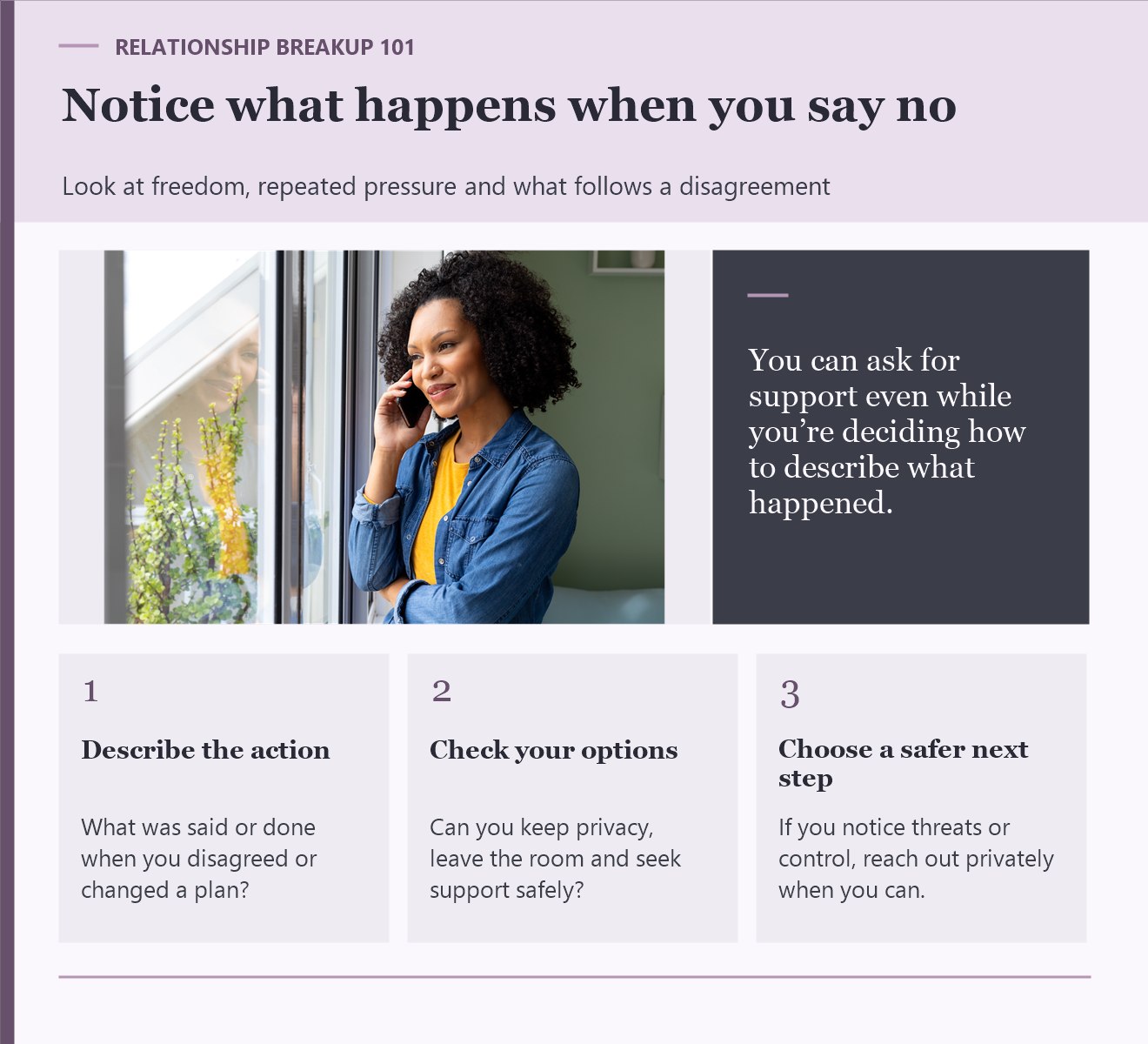
Read the infographic in text
Notice what happens when you say no
Look at freedom, repeated pressure and what follows a disagreement
- Describe the action What was said or done when you disagreed or changed a plan?
- Check your options Can you keep privacy, leave the room and seek support safely?
- Choose a safer next step If you notice threats or control, reach out privately when you can.
You can ask for support even while you’re deciding how to describe what happened.