

If you have decided to break up with your boyfriend, aim for a clear message and a practical plan. You do not need to make him agree that ending the relationship is the right decision. You do need to consider how to communicate it and what comes next.
A respectful conversation can still be painful. Choose a way of ending things that fits the situation, including your safety, the length of the relationship and any responsibilities you share.
On this page
Check safety before choosing the conversation
If you fear intimidation, retaliation, stalking or violence, an in-person conversation may not be the safest choice. You can end the relationship by phone or message, arrange support or avoid direct contact while making a plan.
The National Domestic Violence Hotline’s safety-planning resource can help you consider your circumstances. Use a device your partner cannot access if you are concerned about monitoring. For immediate danger, contact local emergency services.
Say that the relationship is ending
Use plain language rather than becoming unavailable and hoping he will work it out. For example: “I have decided to end our relationship. I do not want to continue dating.” If you mean an ending, avoid describing it as a temporary break to soften the message.
Give a brief reason if you want to, such as different long-term plans or no longer wanting the relationship. You do not need a list of faults, an accusation or proof that someone has behaved badly. Wanting to end it is enough to communicate the decision.

Choose a suitable time and format
When it is safe, choose a time when neither of you needs to drive immediately, rush to work or manage an urgent responsibility. A private conversation may help, but privacy should not leave you isolated if you feel uneasy. Arrange your own way home.
A phone call or message can be appropriate for a brief relationship, distance or a safety concern. You can be direct and considerate in any format. Avoid using a public post, shared group chat or a friend as a messenger when you can safely communicate yourself.
Allow a reaction without reopening the decision
He may feel shocked, sad or angry. You can acknowledge the feeling without offering a promise you do not mean: “I understand this hurts. My decision is still to end the relationship.” You cannot guarantee that the conversation will feel fair or satisfying to both of you.
If the discussion becomes repetitive, end it rather than debating until someone gives in. You do not owe a prolonged conversation that turns insulting or threatening. Leave, end the call or get support if you need to.
Separate the ending from necessary arrangements
Make a short list of shared matters: keys, belongings, bills, housing, pets or plans already booked. Decide which need prompt attention and which can wait. A neutral collection arrangement or trusted third person may help if meeting again is difficult.
If you share children, a tenancy or significant finances, seek appropriate local advice about those responsibilities. A breakup conversation does not settle legal or parenting arrangements. Keep necessary messages factual and limited to the issue being handled.
Set contact boundaries you can follow
Be clear about whether you want no personal contact, limited contact for practical matters or time before discussing friendship. Neither person has to agree to friendship immediately. Avoid offering it simply to make the breakup easier in the moment.
You may want to mute updates, change passwords that were shared and ask friends not to relay personal news. If unwanted contact continues, keep records and seek help suited to the behaviour. Afterward, make space for ordinary support, rest and the next manageable task rather than expecting yourself to feel relieved straight away.
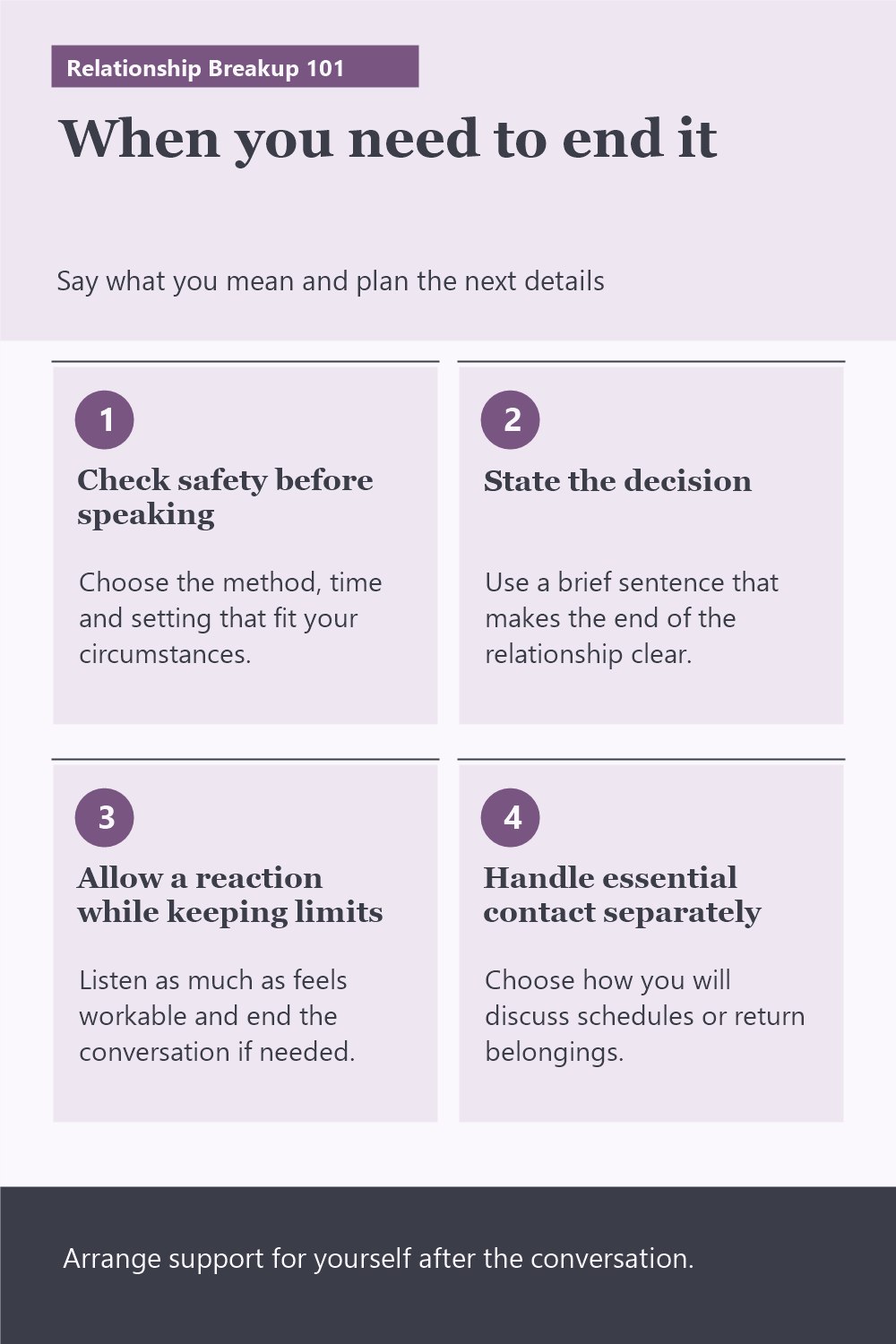
Read the infographic in text
When you need to end it
Say what you mean and plan the next details
- Check safety before speaking Choose the method, time and setting that fit your circumstances.
- State the decision Use a brief sentence that makes the end of the relationship clear.
- Allow a reaction while keeping limits Listen as much as feels workable and end the conversation if needed.
- Handle essential contact separately Choose how you will discuss schedules or return belongings.
Arrange support for yourself after the conversation.