

A breakup guide can offer questions, explanations or ways to reflect. It cannot make another person want the same relationship that you want. That distinction matters when you are deciding what it would mean for reconciliation advice to “work.”
Look for guidance that helps you act honestly and make your own choices. Advice that leaves you dependent on decoding every message or following a secret formula can make it harder to accept a clear answer.
On this page
Choose a goal that belongs to you
Instead of “Make my ex miss me,” try a goal you can act on: understand a recurring argument, take responsibility for a hurtful action, manage necessary contact or rebuild a daily routine. A resource should explain how its suggestions serve that goal.
You can want a reunion while recognizing that the outcome is shared. Improved habits do not create a debt that your ex must repay with another chance. Their decision can remain no, even when your efforts are sincere.

Check whether both people are free to choose
Has your ex asked you to stop contacting them? Have they clearly said that the relationship is over? Useful advice should make room for those answers. It should not reinterpret every refusal as a hidden invitation to try a stronger tactic.
If you both want to discuss reconnecting, ask what that conversation means. Exploring the possibility is not a promise to restart. Either person can decide that the discussion has answered their questions and that they do not want to continue.
Look for accountability that does not bargain for forgiveness
If you caused harm, a useful reflection identifies the action and its impact. “I repeatedly dismissed your concerns” is more specific than “I’m sorry for everything.” Consider what you would change because it matters, including if the relationship does not resume.
An apology should not require a reply, access to the person or an immediate decision. Avoid sending repeated apologies after being asked for no contact. You can work on your behaviour through private reflection and appropriate support.
Distinguish a tactic from a workable relationship change
Pretending to date someone else, withholding contact to provoke anxiety or rehearsing lines designed to create jealousy does not address the problem that led to the breakup. Ask what the advice would change in everyday life if you reunited.
If both people wish to try again, discuss specific expectations: how disagreements end, which responsibilities are shared, what privacy means and how each person can raise concerns. Look at sustained actions. An intense conversation or a promise alone cannot show how a new arrangement will work over time.
Evaluate the resource without urgency
Read a sample and ask whether the advice explains limits, respects consent and gives practical exercises. A message promising a reunion by a particular date or claiming to know every ex’s hidden feelings is a reason to pause.
If payment is involved, use the separate checklist for claims, costs and purchase terms. You do not need to buy something immediately because a sales page suggests that this is your final opportunity.
Keep a future beyond reconciliation
Check whether the guidance remains useful if you never reunite. Does it leave you better able to maintain friendships, meet responsibilities and choose future relationships? Or does every task depend on watching and influencing your ex?
You can put a guide aside if it keeps you stuck in guessing. If contact involves fear, threats or control, seek individual specialist support before considering a reunion. Your wellbeing and freedom to choose matter whether the relationship restarts or ends.
Read the infographic in text
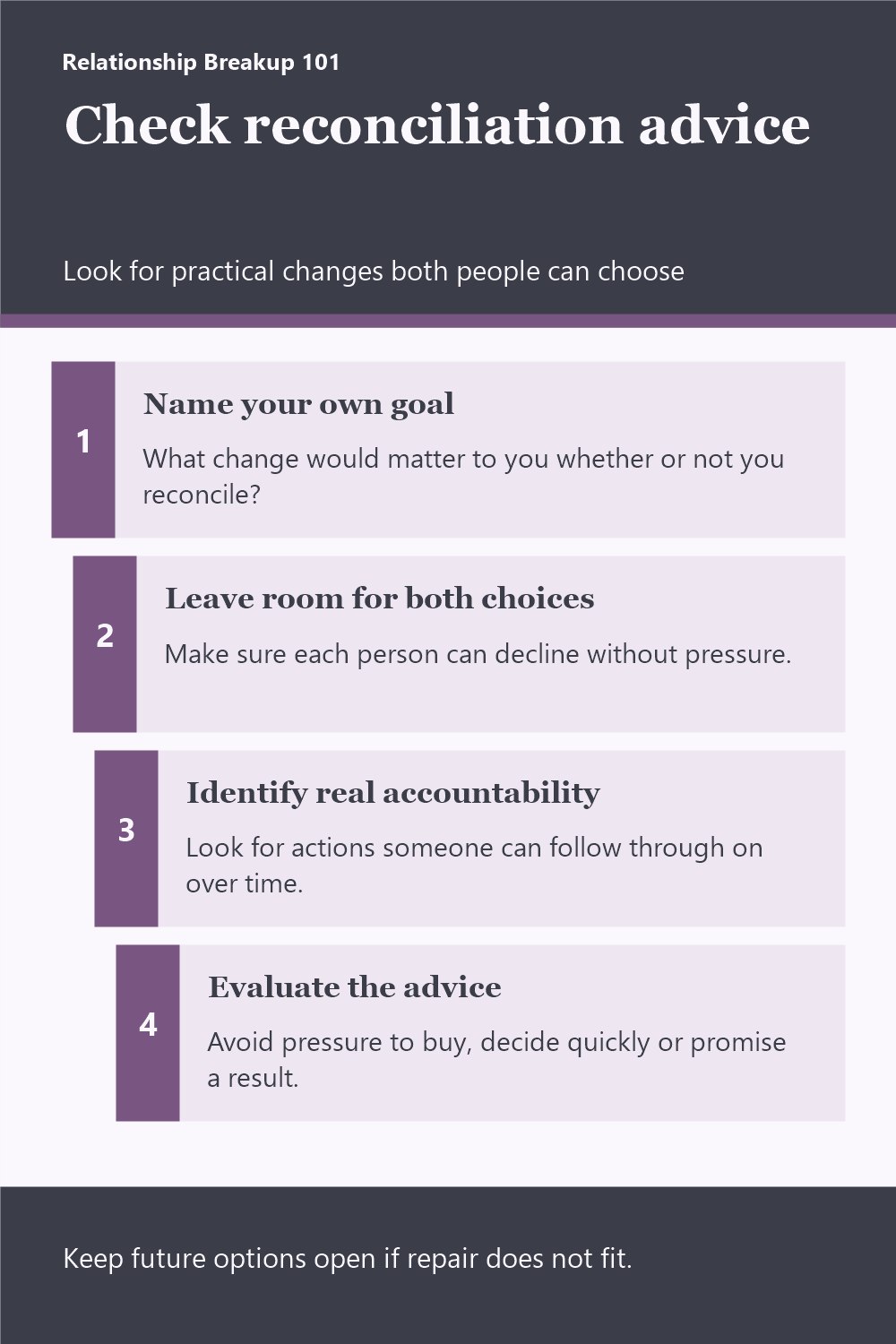
Check reconciliation advice
- Name your own goal What change would matter to you whether or not you reconcile?
- Leave room for both choices Make sure each person can decline without pressure.
- Identify real accountability Look for actions someone can follow through on over time.
- Evaluate the advice Avoid pressure to buy, decide quickly or promise a result.
Keep future options open if repair does not fit.