

A partner can be kind and still not be the person you want to continue a relationship with. You may appreciate their qualities while feeling that the relationship no longer fits your needs or wishes. You do not have to find a fault that makes leaving acceptable.
Being considerate means communicating honestly where it is safe and handling shared responsibilities thoughtfully. It does not require staying, offering another chance you do not want or guaranteeing that your partner will not feel hurt.
On this page
Be clear about your decision before you explain it
Ask yourself whether you are ending the relationship or asking to work on something specific. If you want a change and are genuinely open to staying, that is a different conversation. If your decision is final, do not present a list of improvements as though completing it would bring you back.
You do not need to defend every feeling. “I do not want to continue this relationship” can be true even when the other person has treated you well. If guilt makes it difficult to act, talk with someone you trust about your own reasons and practical concerns.

Choose a suitable way to communicate
A private conversation may suit some situations, but meeting in person is not a universal requirement. Distance, accessibility, a history of pressure or concerns about safety can make a call or written message more appropriate. Choose a format that lets you communicate clearly and end the exchange.
Think about transport and where you will both be afterwards. If a partner’s behaviour has included threats, control or intimidation, do not let the label “nice” override what has actually happened. Seek specialist support with the plan when needed.
Use honest words without turning it into a judgement of their worth
You might say: “I appreciate the care you have shown me, and I have decided to end our relationship. I do not want to continue as partners. I know this may be upsetting, and I want to be clear rather than leave you with false hope.” Change the wording so it reflects what is true.
Avoid telling them that nobody else will understand them, that they will definitely meet someone better or that they should feel relieved. Those statements predict feelings or outcomes you cannot know. You can be warm without making promises about their future.
Allow feelings while keeping the boundary
Your partner may be sad, surprised, angry or in agreement. A difficult reaction is not automatically manipulation. You can listen to a reasonable question and acknowledge the feeling without reopening a final decision: “I understand this hurts. My decision has not changed.”
If the conversation becomes threatening, coercive or overwhelming, you can end it. You do not owe affection, sex or continued access to yourself as comfort. Arrange practical communication separately where responsibilities remain, and seek support if unwanted contact or threats continue.
Make realistic plans for contact and shared responsibilities
Discuss only the arrangements that need attention now, such as returning belongings or communicating about a bill. Get appropriate independent advice for complex housing, financial or parenting matters. A wish to be kind does not require making rushed commitments.
Friendship may or may not be suitable later, and both people get a choice. Do not promise it as consolation. Consider what support you need after the conversation too: a trusted person, a quiet evening or help with the next practical step.
Acknowledge their kindness without leaving the decision open
You might say, “I’ve appreciated how kind you’ve been to me. I’ve decided to end our relationship, and I wanted to tell you directly.” Give them time to hear it. You can answer a question while keeping your decision clear.
If they ask you to reconsider and that isn’t what you want, say so simply. Agree on necessary practical contact if it’s safe and you both need it.
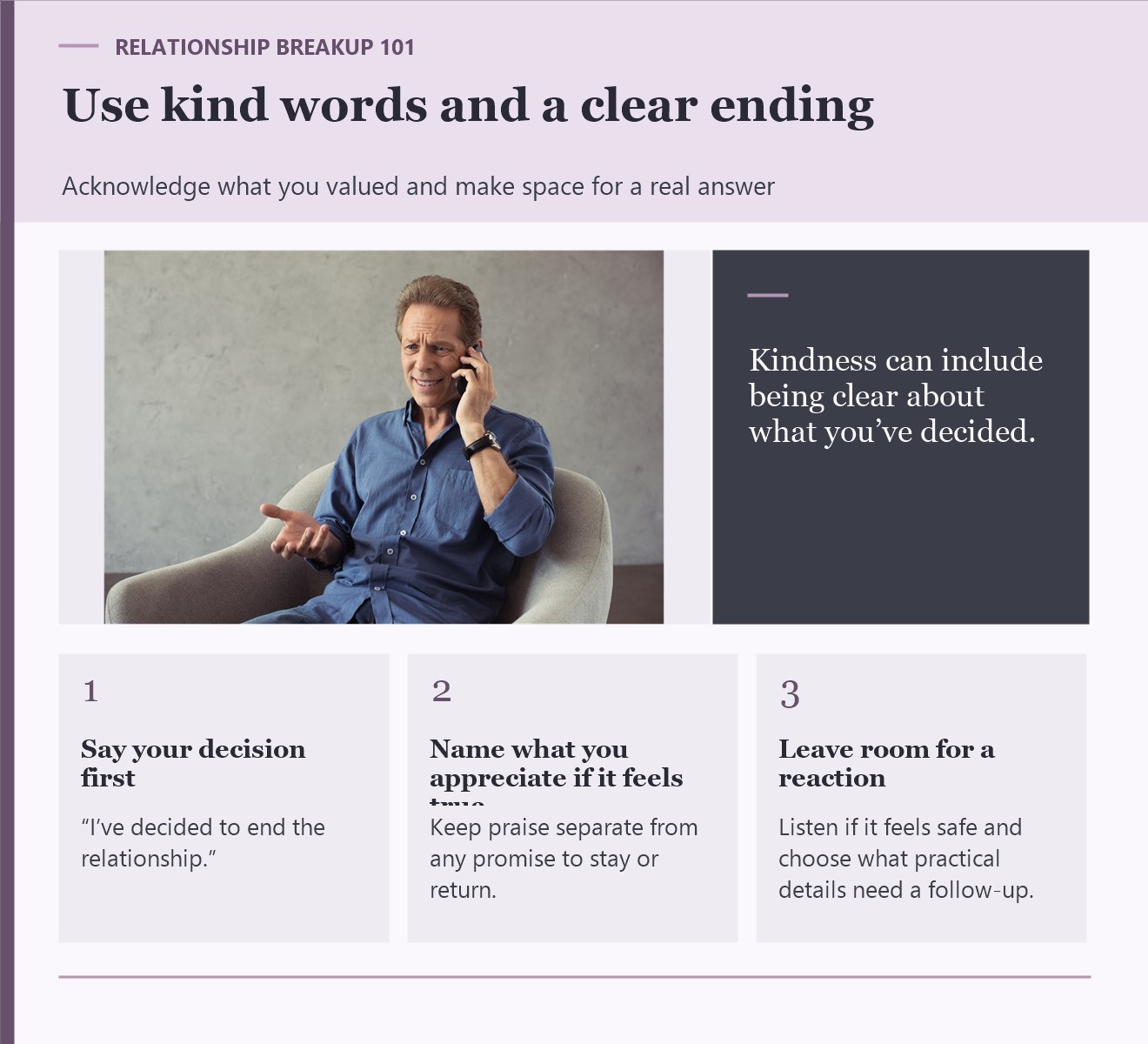
Read the infographic in text
Use kind words and a clear ending
Acknowledge what you valued and make space for a real answer
- Say your decision first “I’ve decided to end the relationship.”
- Name what you appreciate if it feels true Keep praise separate from any promise to stay or return.
- Leave room for a reaction Listen if it feels safe and choose what practical details need a follow-up.
Kindness can include being clear about what you’ve decided.