

If you have tried to end a relationship and then stayed or returned, start with what happened. Affection, uncertainty, money, housing, caring responsibilities or fear may all affect what you can do next. A previous attempt does not establish a diagnosis or mean you caused another person’s harmful behaviour.
You may still be deciding whether to leave. If your decision is clear, the useful question is often more specific: what support or arrangement would help you follow through? You do not have to persuade your partner to agree that the relationship should end.
On this page
Separate your decision from the obstacles
Write two short statements, somewhere private and safe: “What I want for this relationship” and “What makes that difficult.” Wanting to leave while needing time to arrange housing is different from wanting to stay and work on a particular problem.
Be honest about uncertainty without demanding certainty about every future feeling. Missing someone later is possible even when ending the relationship fits your needs. If you want time to think, describe that accurately rather than calling it a definite breakup.

Look at the moment the earlier attempt changed
Think through the sequence. Did you agree to another chance after an apology, lose access to somewhere to stay, feel overwhelmed by a long conversation or become afraid? Identify the specific point where your plan stopped working.
Match help to that point. You might need a lift, an affordable room, independent advice about shared responsibilities, someone to call afterwards or a shorter conversation. If there was intimidation, the answer is support and safety planning rather than becoming more forceful in person.
Arrange practical support before another conversation
Ask a trusted person for something concrete: “Could I call you after I speak to them?” or “Can you help me find out what housing options are available?” Consider work, medication, accessibility, pets and caring arrangements as part of the plan.
Where there is abuse, monitoring or a risk of retaliation, a specialist service can help you think through your circumstances. The National Domestic Violence Hotline’s safety-planning guidance is a starting point. If your device may be monitored, consider accessing support from a safer device.
Use clear words without reopening every argument
If you have decided to end it, a brief statement can help: “I have thought about this, and I am ending our relationship. I know this is painful. I can discuss the practical arrangements, but my decision is made.” Use words that are true for you; do not promise friendship or another chance to soften the moment.
You can acknowledge distress without accepting a continuing relationship. If someone talks about suicide or self-harm, take it seriously and involve qualified support rather than promising to stay. NIMH provides warning signs and U.S. crisis information, including calling or texting 988. Use local emergency services for immediate danger.
Decide what contact is actually necessary
Some people can pause contact; others share children, property, work or responsibilities. Choose a workable channel and specific subjects where possible. For example, use one email thread for collecting belongings rather than moving between several emotional conversations.
A request for less contact does not guarantee it will be respected. If unwanted contact, threats or monitoring continue, seek specialist support. Keep children out of the role of messenger, and get appropriate local advice when legal or care arrangements are involved.
Make room for feelings without treating them as instructions
Plan an ordinary next step after the conversation: a meal, a quiet place to sleep or a check-in with someone you trust. Keep your reasons available privately if reading them helps, but avoid recording sensitive plans where that could create a risk.
If you return or reconsider, review what changed and what remains unresolved. You do not have to turn a difficult process into a verdict on your character. Independent counselling or practical support may help you make a decision that reflects your circumstances.
Plan for the moment that changed things last time
If an earlier attempt ended when you realized you had nowhere to go that evening, start by asking someone trustworthy about a place to stay or another practical option. You can prepare for what happened without turning another conversation into a test.
When earlier attempts involved threats or someone blocking you from leaving, use a safer device or private setting if possible to talk with an advocate. You can get help planning before you raise the issue again.
Read the infographic in text
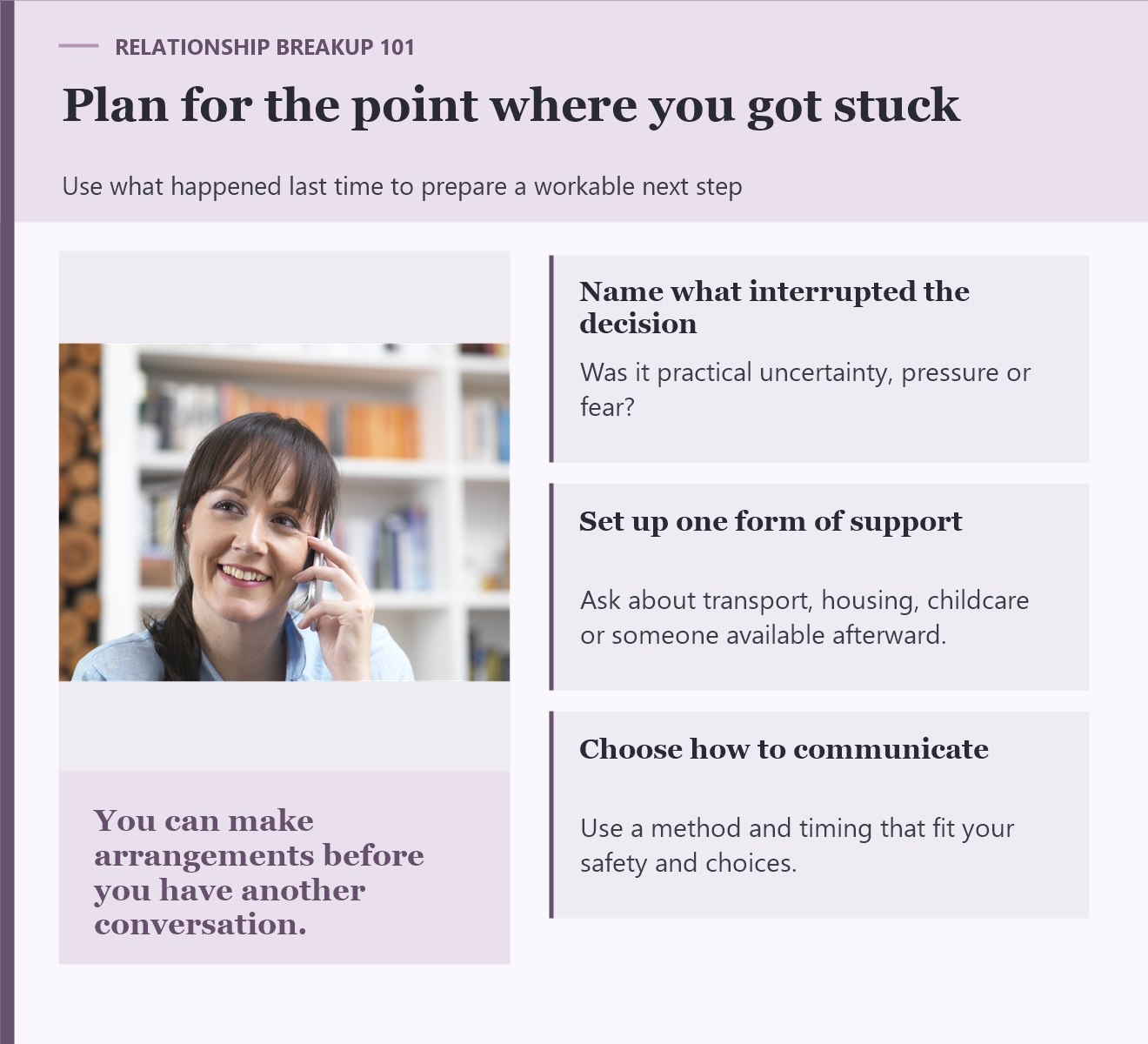
Plan for the point where you got stuck
Use what happened last time to prepare a workable next step
- Name what interrupted the decision Was it practical uncertainty, pressure or fear?
- Set up one form of support Ask about transport, housing, childcare or someone available afterward.
- Choose how to communicate Use a method and timing that fit your safety and choices.
You can make arrangements before you have another conversation.