

When a conversation has ended badly, reaching out again can feel uncertain. You may want to apologise, explain a concern or agree on a practical next step. Start by being clear about your purpose and whether another conversation is welcome.
Better wording can help people understand each other, but it cannot require someone to forgive, reply or continue a relationship. The aim is a respectful exchange that leaves both people free to choose.
On this page
Check whether contact is welcome and safe
Respect a request for no contact, a block or a clear refusal to talk. Do not switch accounts or involve friends to get around that boundary. If an essential shared responsibility needs attention, use an agreed or appropriate formal channel.
If you fear retaliation, intimidation or violence, seek private support before trying another conversation. A joint discussion is not always the safest response, and you are not responsible for finding words that prevent someone else from harming you.

Ask for a suitable time and name one purpose
Try a brief invitation: “I would like to apologise for what I said yesterday. Would you be willing to talk for ten minutes?” Or: “We still need to decide how to handle the shared bill. Is email easier?” Let the purpose fit the actual situation.
Avoid sending a long explanation before the other person has agreed to receive it. Offer a reasonable choice of time or format, and allow a no. If both people are willing but overwhelmed, an agreed pause may be more useful than continuing immediately.
Own a specific action without bargaining for forgiveness
If you caused hurt, name what you did: “I interrupted you and mocked your concern. That was unfair.” Keep an apology separate from an argument about why the other person also behaved badly.
Describe what you intend to do differently, such as pausing before a discussion becomes insulting or giving notice when plans change. The other person can hear an apology and still need time, disagree with you or decide not to reconnect.
Listen for meaning and check your understanding
Let the other person finish a point before responding. Ask a short question where something is unclear: “Was the main problem that I changed the plan without checking with you?” Reflecting a concern gives them a chance to confirm or correct it.
You can understand an experience without agreeing with every conclusion. The NHS guidance on relationships and mental wellbeing includes listening, boundaries and managing conflict. Aim for a format that allows both people to participate, rather than requiring one particular tone or style as proof of care.
Turn a general complaint into a workable request
“You never think of me” leaves a lot to interpret. A specific request might be: “Could you check with me before inviting people over on a work night?” Discuss whether the request is realistic and what each person can agree to.
If you find a practical arrangement, describe who will do what and when you will revisit it. Some differences remain important even after a calm conversation. Do not use “we communicated” as proof that the underlying problem has been resolved.
Accept the outcome and decide what comes next
You may agree on another conversation, settle one task or discover that you want different things. A conversation can also end without agreement. You can say, “I understand that you do not want to continue this discussion,” and stop.
If communication repeatedly becomes hostile or impossible, consider what support or boundaries you need. Individual counselling may help you think through your own choices. You do not have to keep a door open indefinitely to demonstrate patience or love.
Make the purpose of a new conversation clear
If your last conversation ended mid-argument, you can ask “Would you like to talk about what happened when the plan changed? I’d like to understand your side and agree how to handle it next time.” Let them suggest another time or decline.
If the issue is serious and you have been asked for no contact, respect that boundary. If you need to address practical matters, use the appropriate agreed channel and keep the purpose narrow.
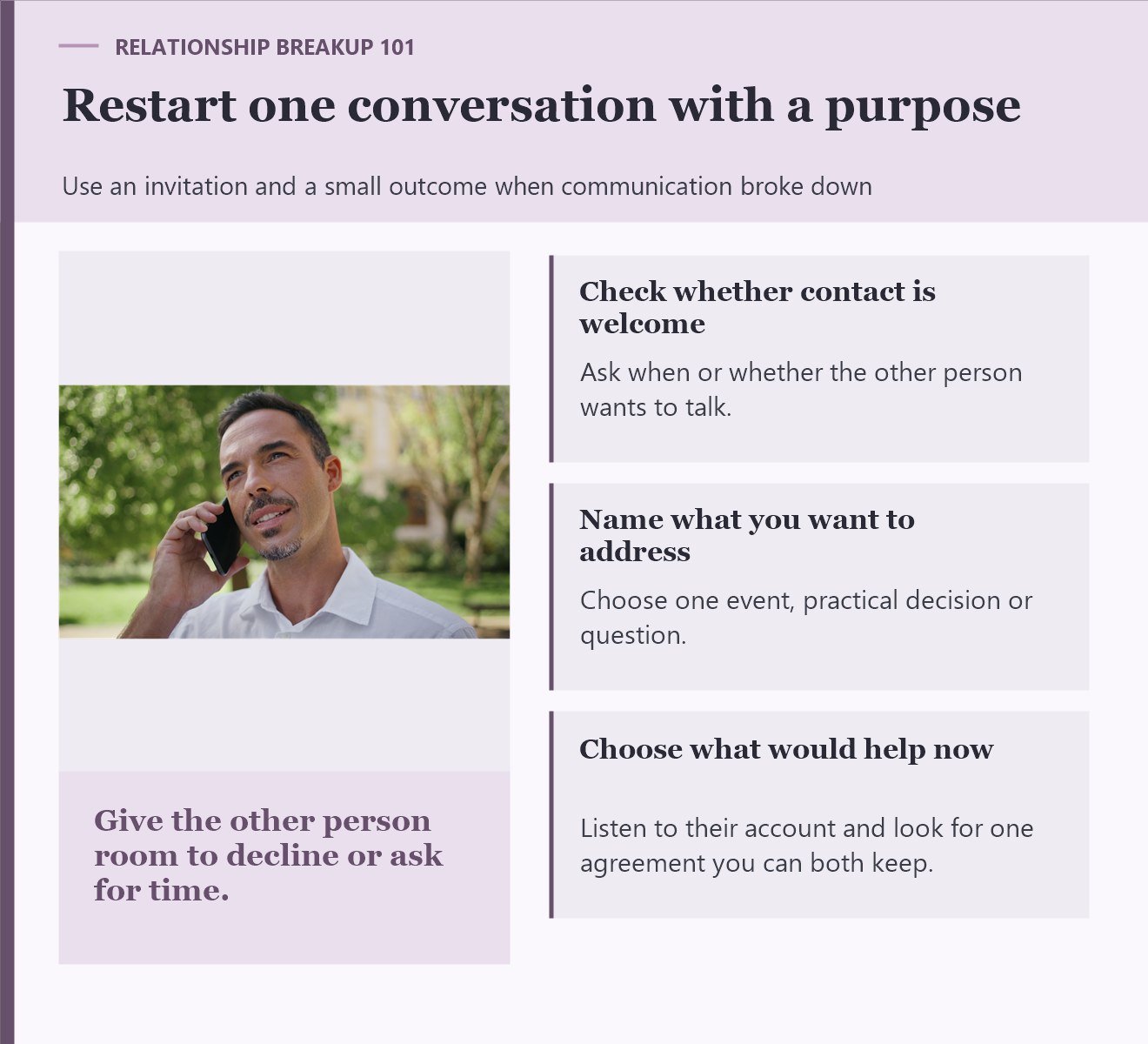
Read the infographic in text
Restart one conversation with a purpose
Use an invitation and a small outcome when communication broke down
- Check whether contact is welcome Ask when or whether the other person wants to talk.
- Name what you want to address Choose one event, practical decision or question.
- Choose what would help now Listen to their account and look for one agreement you can both keep.
Give the other person room to decline or ask for time.