

A long-term breakup can change the shape of ordinary days as well as the future you imagined. You might feel sadness, relief, anger, longing or several of these together. There is no requirement to immediately view the separation as a fresh start.
Recovery does not follow a fixed deadline. Focus on what would make the next few days more manageable, while allowing room for feelings and practical matters that may take longer to work through.
On this page
1. Make room for a balanced account of the relationship
Missing someone does not erase the reasons the relationship ended. Equally, you do not have to turn every shared memory into a mistake to move forward. Try writing what you miss alongside what was difficult, if doing so helps you think more clearly.
If rereading messages or reviewing the past leaves you more distressed, pause the exercise. You can choose when and with whom to revisit the relationship. The aim is understanding, rather than forcing yourself to feel grateful or certain about the breakup.

2. Build a gentle routine around basic needs
Choose a few achievable anchors: something to eat, time to rest, essential medication as prescribed, or a short walk if that suits you. A familiar routine can give the day some structure without requiring a complete reinvention of your life.
Scale the plan to your current capacity and responsibilities. On a difficult day, preparing one meal or answering one necessary message may be enough to begin. Avoid treating a disrupted day as evidence that you are failing to recover.
3. Reconnect with people and activities on your terms
Think of one person you could contact and make a specific request: company for a meal, help with an errand or someone to listen without analysing your former partner. You can tell people when advice or repeated questions are not helpful.
Returning to an old interest or trying something new is optional, not a performance of happiness. Choose something affordable and manageable that you would like to do. Quiet company can be as useful as a busy social schedule.
4. Choose contact arrangements that fit your situation
Some people prefer a break from contact; others need communication about children, housing or shared responsibilities. Consider what contact is necessary, what channel to use and which topics you want to keep separate. There is no universal rule that fits every breakup.
You can also decide how to handle social media, mutual friends and reminders at home. If unwanted contact is persistent or frightening, seek support and consider safety rather than trying to find the perfect message that will make the other person accept your boundary.
5. Get more support when coping feels difficult
The NHS explains that grief can follow different kinds of loss, including the end of a relationship. People respond differently, and you do not have to pass through a particular set of feelings in order.
If distress is making daily life difficult, or the support you have is not enough, consider speaking with a qualified mental health professional or primary care service. If you feel unable to stay safe or may harm yourself, seek urgent local crisis or emergency help.
6. Let future choices develop at your own pace
You do not need to date again to prove that you have moved on, and there is no fixed waiting period that determines readiness. Consider your interest, energy and ability to be honest with someone new about what you want.
Confidence may return unevenly. Make decisions in steps, leaving room to change plans as you learn what works for you. A meaningful life after a breakup can include relationships, friendships, interests and time alone in whatever balance you choose.
Read the infographic in text
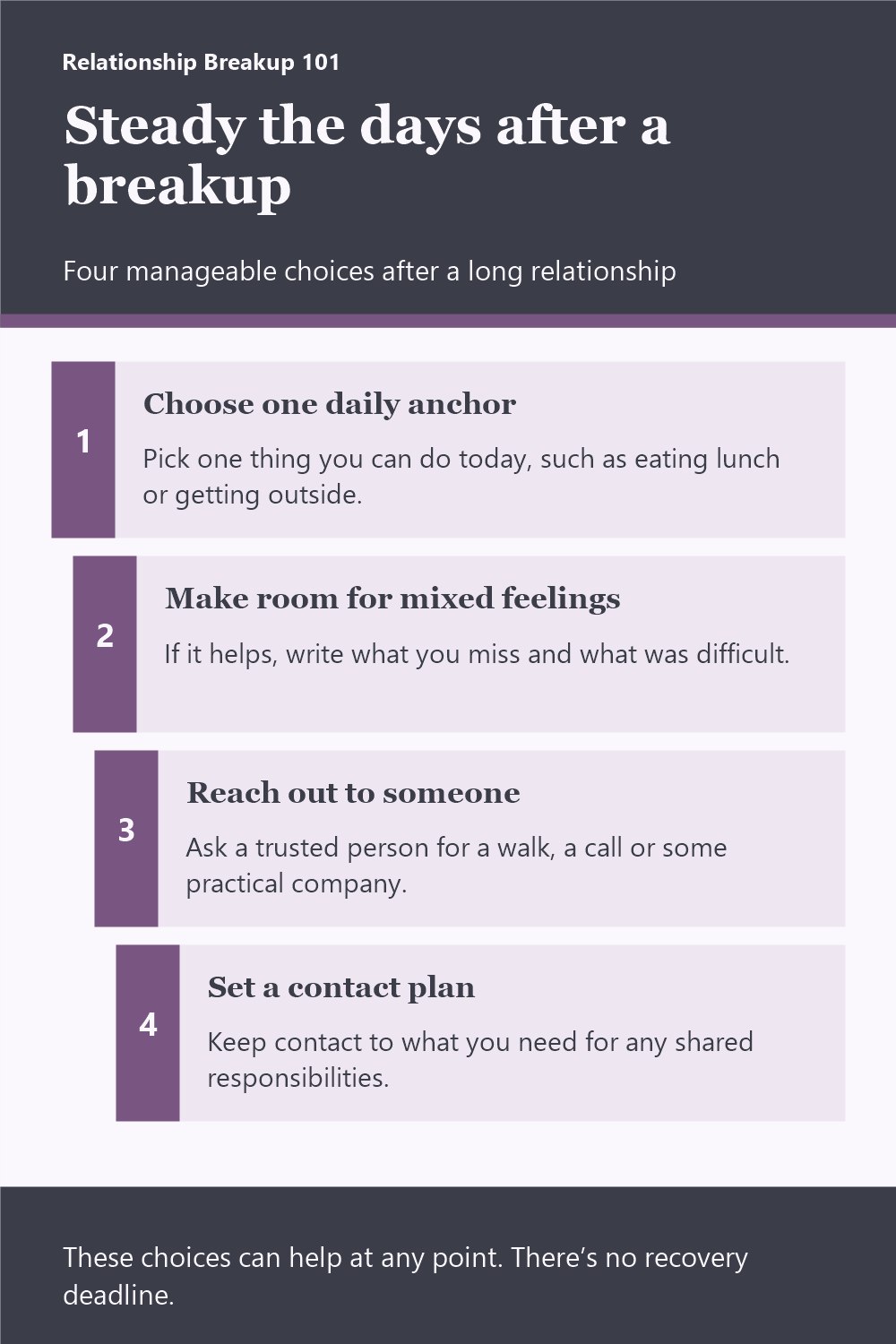
Steady the days after a breakup
- Choose one daily anchor Pick one thing you can do today, such as eating lunch or getting outside.
- Make room for mixed feelings If it helps, write what you miss and what was difficult.
- Reach out to someone Ask a trusted person for a walk, a call or some practical company.
- Set a contact plan Keep contact to what you need for any shared responsibilities.
These choices can help at any point. There’s no recovery deadline.