

There is no single checklist that can decide whether you should break up with your boyfriend. A quieter phase, a difficult week or a disagreement can mean different things in different relationships. What matters is the pattern, what each person wants and whether you can make choices freely.
Use these five questions to clarify what needs attention. They are not a score, and you do not need to prove that your boyfriend is a bad person before deciding that you no longer want to date him.
On this page
1. Can both of you pursue important goals?
Think about an actual decision ahead: work, study, moving, care responsibilities or time with family. Can you discuss each person’s priorities without one of you being expected to surrender every preference?
Some changes can be planned together. Others reveal that you want incompatible arrangements. Describe what would need to happen, what each person freely agrees to and what neither of you wants to give up. Avoid treating either person’s ambitions as automatically more important.

2. Do your plans fit where it matters to you?
Ask about the future you each want rather than hoping the other person will eventually change. Children, where to live, finances and the shape of a commitment may involve choices that cannot be settled by a vague promise to work it out later.
Different beliefs or preferences do not automatically make a relationship unworkable. Consider what living with the difference would involve. A workable agreement should be something both people freely choose, rather than something one person tolerates under pressure.
3. How are you treated in everyday life now?
Early dating excitement often changes. A reduction in surprise gifts or frequent messages does not by itself show that love has ended. Look at ordinary care: listening, keeping agreements, sharing responsibilities and respecting a refusal.
If something you miss matters, can you raise it and discuss a realistic change? If the issue is humiliation, threats, monitoring or fear, focus on support and safety rather than trying to recreate the first few dates. You are not responsible for making mistreatment stop through greater effort.
4. Do you want this relationship, or feel obliged to keep it?
Imagine a trusted person asking why you stay. Perhaps you want the connection and see a future together. Perhaps your main answer is guilt, time already invested or fear of disappointing other people. Mixed answers are worth exploring without judging yourself.
Attraction to someone else or a wish for more independence can prompt reflection, but neither automatically supplies a complete answer. Ask what you want in this relationship as it actually exists, rather than comparing it with an imagined life that has no difficulties.
5. What would help you decide with less pressure?
A useful next step might be an honest conversation, time to think, individual support or information about practical arrangements. Choose a step that addresses the uncertainty you have named. You do not have to make a public announcement while you are still sorting through your thoughts.
If you decide to end the relationship, prepare clear words and the arrangements that matter. If you fear the response, seek support before arranging contact. You can care about your boyfriend and still decide that continuing the relationship is not what you want.
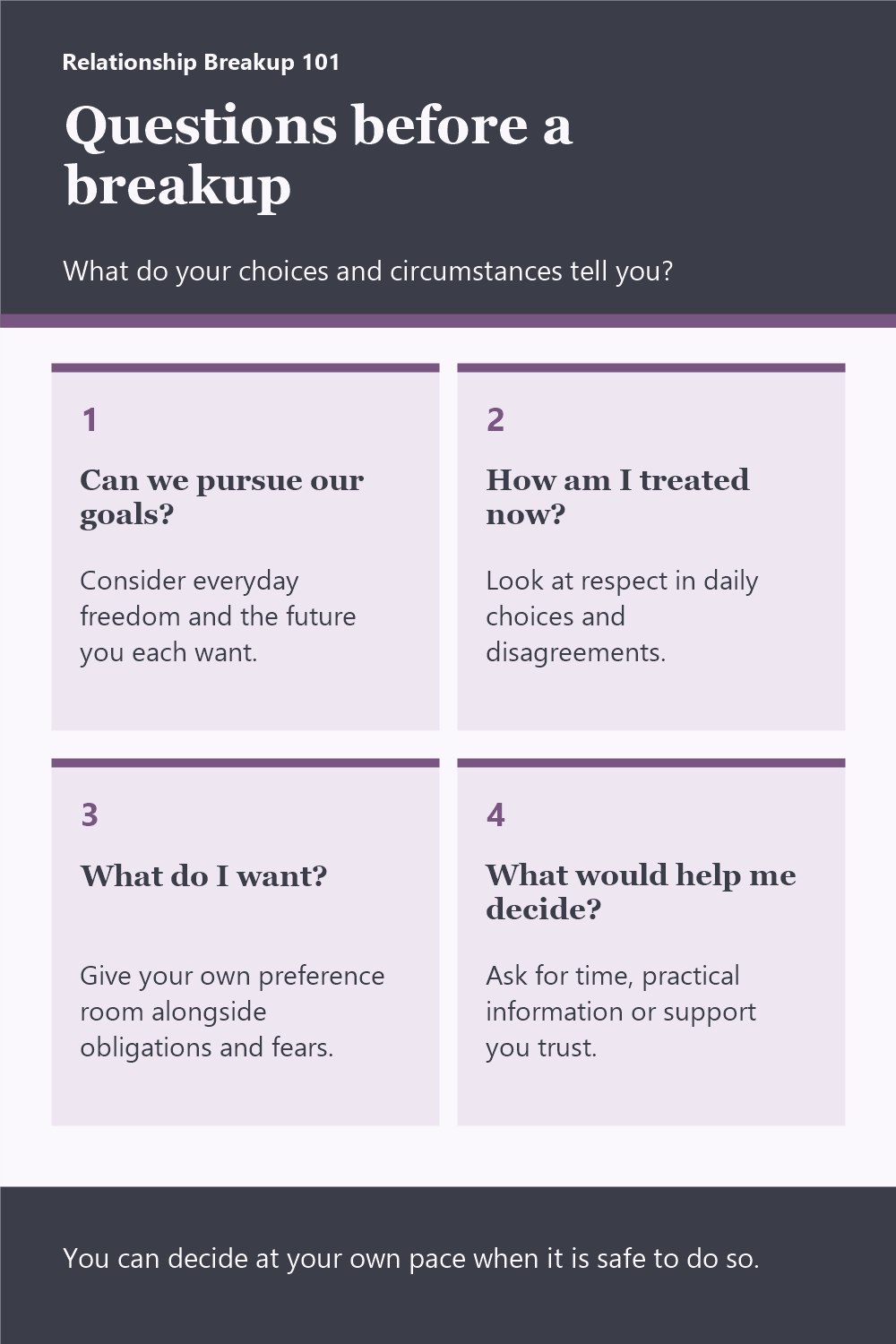
Read the infographic in text
Questions before a breakup
- Can we pursue our goals? Consider everyday freedom and the future you each want.
- How am I treated now? Look at respect in daily choices and disagreements.
- What do I want? Give your own preference room alongside obligations and fears.
- What would help me decide? Ask for time, practical information or support you trust.
You can decide at your own pace when it is safe to do so.