

When a partner has depression, you may care deeply about them and still feel tired, uncertain or unhappy in the relationship. Their needs matter, and so do yours. A diagnosis alone cannot tell you whether to stay or leave.
Try to separate three questions: what support is available for the depression, what behaviour is happening between you and what you want from the relationship. You do not have to exhaust every possible option before you are allowed to make a choice.
On this page
- Understand the condition without making assumptions
- Offer help that has a clear and manageable shape
- Keep compassion and boundaries in the same conversation
- Build support beyond the two of you
- Consider your choices without a guilt test
- Review workable arrangements, not a recovery deadline
- Plan the practical details if you leave
Understand the condition without making assumptions
Depression can affect energy, sleep, concentration and interest in activities. The NIMH overview of depression explains that symptoms vary and treatment can help. A clinician can assess symptoms; a relationship article cannot diagnose your partner.
Withdrawal or low energy does not automatically mean that someone no longer loves you. At the same time, you do not have to interpret every relationship difficulty as a symptom. Ask about their experience when they are willing to talk, and describe what you have noticed without assigning motives.

Offer help that has a clear and manageable shape
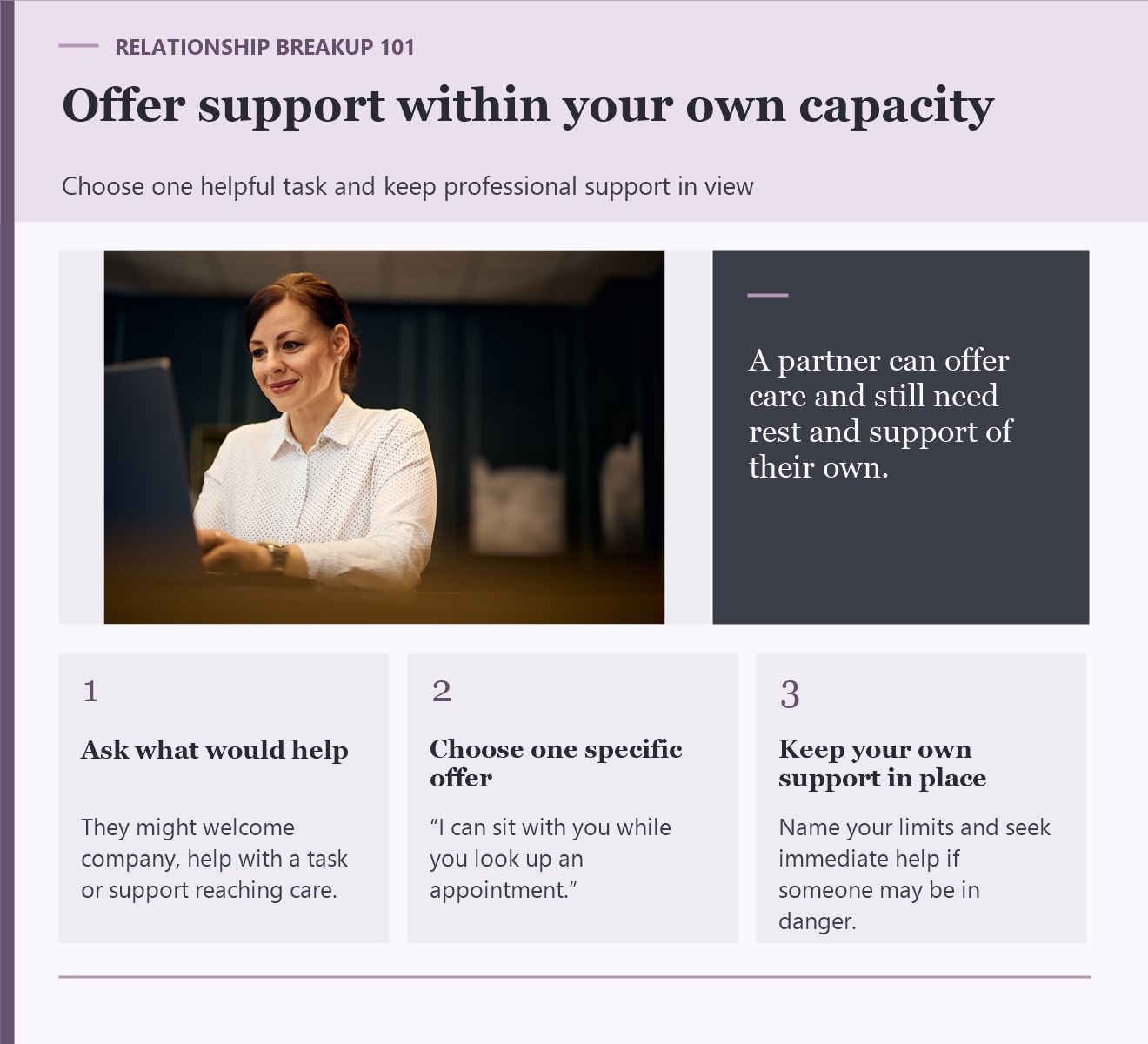
Ask what would help: listening, company for a short walk, help finding care or support with one daily task. Offer what you can realistically provide. “I can sit with you while you look for an appointment” is clearer than promising to handle everything.
Encourage professional support without taking charge of treatment. Choices about medication or therapy belong in a discussion with a qualified clinician. Cost, waiting lists, side effects and previous experiences can make seeking help difficult; a delay is not proof that someone does not care about you.
Keep compassion and boundaries in the same conversation
You can acknowledge distress and still say what behaviour you cannot accept. For example: “I want to hear what is hard today. I will pause this conversation if you insult me, and we can return to it when we can speak respectfully.”
A mental-health condition does not make threats, coercion or violence something you must tolerate. If you are afraid of your partner, seek private help with safety planning. Avoid relying on a joint confrontation or a promise that being more patient will keep you safe.
Build support beyond the two of you
The NHS guidance on helping someone with depression encourages listening, seeking appropriate help and looking after yourself. A trusted person, your own clinician or a support group may give you somewhere to discuss the strain.
Take statements about suicide seriously. In the United States, call or text 988 for crisis support; call 911 for an immediate life-threatening emergency. Elsewhere, use local crisis or emergency services. You can seek urgent help without promising to remain in the relationship or managing the risk alone.
Consider your choices without a guilt test
Ask whether you want the relationship, feel safe in it and have room for your own needs. You may choose to stay with clearer support, take space or end it. Depression does not make someone unworthy of love, and caring about someone does not require continuing a partnership.
If you are unsure, an individual counsellor can help you think through your own position. You do not need your partner’s permission to seek support, and a relationship decision does not have to wait until their symptoms have disappeared.
Review workable arrangements, not a recovery deadline
If you both want to continue, discuss a small number of practical arrangements: how to flag a difficult day, which tasks each person can manage and whom else to contact for support. Make room for changing capacity without assuming one person can absorb every responsibility.
You can agree to review those arrangements on a particular day. That is different from demanding that depression be cured by a deadline. Notice whether the arrangements are sustainable and whether both people can discuss changes freely.
Plan the practical details if you leave
Think about housing, money, belongings, children and support for yourself. Keep the explanation clear and avoid turning the conversation into a verdict on your partner’s diagnosis. You might say, “I care about you, but I am ending our relationship.”
Where it is safe and welcome, you can point them toward existing support. You are not required to become their sole carer after separating. If there are threats, stalking or concerns about safety, get individual advice about the safest way to communicate and manage necessary contact.
Make a specific offer and give them room to choose
If your partner is having difficulty arranging help, you could offer to sit with them while they make a call or to bring a meal. Ask whether they would like that and decide what you can reliably offer. Their healthcare choices can stay with them where there is no immediate danger.
If they talk about harming themselves, take it seriously and seek immediate help. In the U.S., you can call or text 988. The Anxiety and Depression Association of America’s guidance for partners describes ways to support someone while looking after yourself.
Read the infographic in text
Offer support within your own capacity
Choose one helpful task and keep professional support in view
- Ask what would help They might welcome company, help with a task or support reaching care.
- Choose one specific offer “I can sit with you while you look up an appointment.”
- Keep your own support in place Name your limits and seek immediate help if someone may be in danger.
A partner can offer care and still need rest and support of their own.