

Time apart may give you room to think, but a breakup does not automatically repair a relationship. Missing someone, feeling lonely or remembering good times can be real experiences without answering whether being together would work differently.
If you are considering reconciliation, focus on what ended the relationship, what has changed and whether both people freely want another attempt. You can also decide that the separation should remain an ending.
On this page
- Be clear about whether this is a breakup or an agreed pause
- Name the problem that time alone cannot solve
- Look for changes you can describe and sustain
- Let the time apart include a life of your own
- Have a conversation that allows either answer
- Decide from the present relationship, not only the memory

Be clear about whether this is a breakup or an agreed pause
A breakup ends the relationship. An agreed pause needs an actual conversation about what the pause means. Do not assume that your former partner is waiting, remaining exclusive or planning to return because you still hope to reconcile.
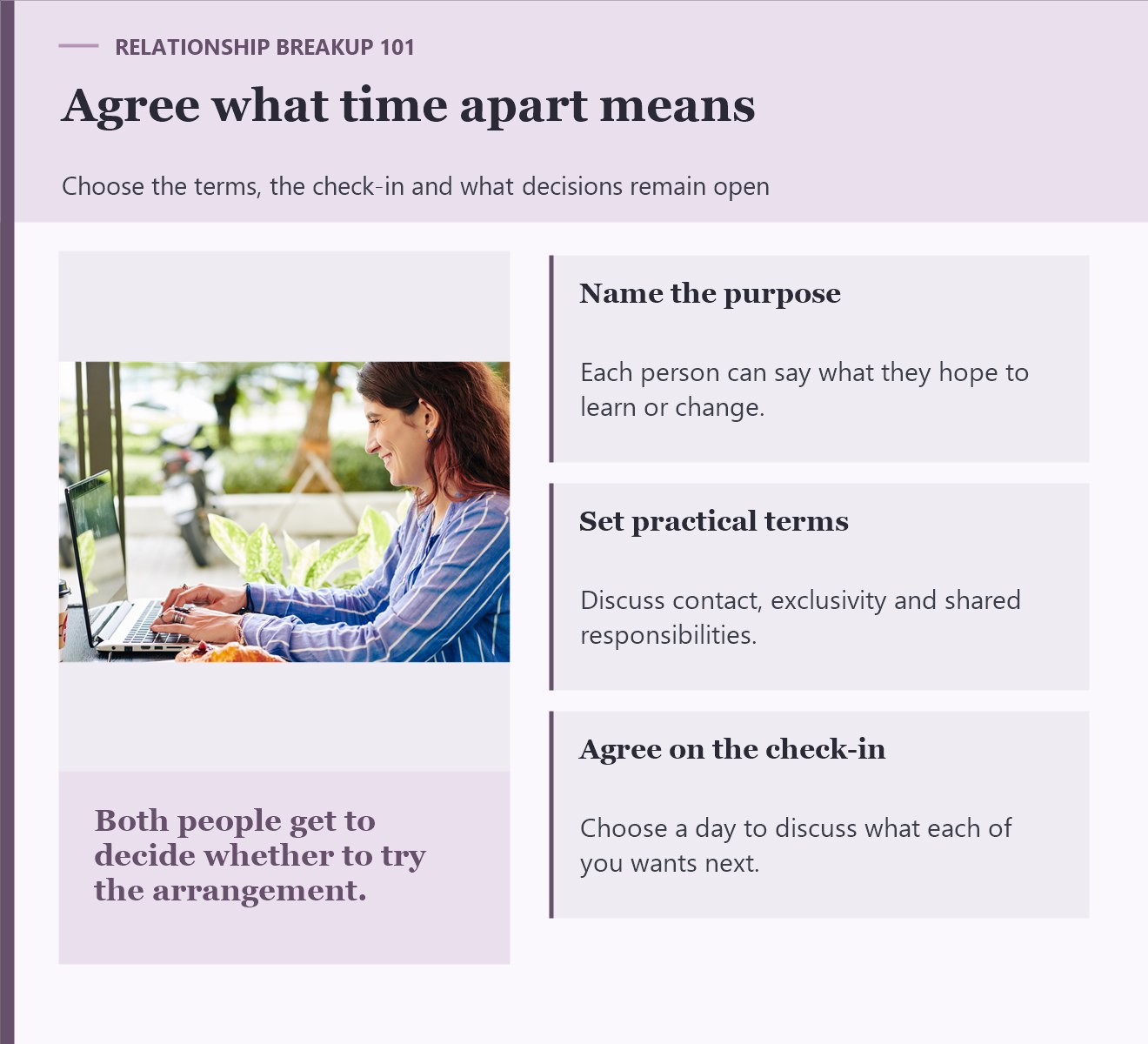
If you both choose a pause, discuss contact, dating other people, shared responsibilities and when you might check in. A check-in is a chance to talk, not a promise to restart the relationship. Either person can change their mind.
Name the problem that time alone cannot solve
Describe the difficulty in specific terms: repeated cancelled plans, a disagreement about children, an unequal share of work or an argument that keeps returning. “We needed space” may describe the response without identifying the problem.
Ask what would need to happen differently. More time together will not settle an incompatible essential goal, and a warm reunion will not by itself establish trust. If there was intimidation or abuse, seek individual support and safety advice rather than treating reunion as the goal.
Look for changes you can describe and sustain
A useful change connects to the original issue. If unreliable plans caused hurt, an example might be making arrangements that fit both schedules and giving notice when something changes. If shared tasks caused resentment, discuss a division of work that can actually be maintained.
A promise is a starting point for a conversation. Look at consistent behaviour over time, and be honest about what you have and have not seen. Neither person has to offer another chance to test a promise.
Let the time apart include a life of your own
Keep ordinary routines where possible: meals, rest, work, friends and interests. Ask for support with practical tasks if you need it. Building a manageable day does not mean that you must stop feeling sad before making progress.
Avoid using silence, social-media posts or new dates to provoke a reaction. If less contact helps you settle, choose it as a boundary for your wellbeing. Shared parenting, property or other responsibilities may still need a limited and practical communication route.
Have a conversation that allows either answer
If contact is welcome, you could say, “I have been thinking about what went wrong. Would you be open to one conversation about it?” Respect a refusal or a request for no contact. Do not turn an invitation into repeated attempts to persuade.
If you do talk, discuss the original problem and what each person wants now. Ask about pace, boundaries and specific changes. You do not need to resume the relationship, move back in or make an immediate commitment during that conversation.
Decide from the present relationship, not only the memory
Consider whether there is mutual interest, respectful communication and a workable response to the problem that separated you. Missing familiarity is understandable, but it is not the same as choosing the relationship as it could realistically be now.
If you decide against returning, that does not make the time apart a failure. You may have learned what support, boundaries or partnership you want. If you do try again, keep room to review how things are going without treating the reunion as proof that everything is resolved.
Put a check-in and a contact agreement on paper
If you both want two weeks apart, discuss which messages you still need to exchange and whether you are free to date other people. Agree when you will talk about the experience. Use words that would mean the same thing to both people.
You can decide that a pause no longer fits, or that you need different terms. If you do not have a shared agreement, make your own decisions about contact within any necessary practical arrangements.
Read the infographic in text
Agree what time apart means
Choose the terms, the check-in and what decisions remain open
- Name the purpose Each person can say what they hope to learn or change.
- Set practical terms Discuss contact, exclusivity and shared responsibilities.
- Agree on the check-in Choose a day to discuss what each of you wants next.
Both people get to decide whether to try the arrangement.