

A casual sexual relationship can be something both adults freely want. A committed partnership can also take different forms. The problem is not the label itself, but assuming that you share an agreement when you have not discussed it.
Late messages, private meetings or a lack of public photographs cannot tell you everything about someone’s intentions. Ask about the relationship you want instead of trying to decode a set of hidden signs.
On this page

Start with the arrangement you would choose
Ask yourself what you want now: occasional dating, an ongoing sexual relationship, exclusivity, emotional closeness or a longer-term commitment. You can be unsure, and your wishes can change.
Be honest about an arrangement you are accepting only because you hope it will turn into something else. It is possible to enjoy parts of the connection while recognising that it is not meeting an important need.
Ask a direct question at a suitable time
Try: “I have enjoyed seeing you, and I would like to understand what we are each looking for. I want an exclusive relationship. Is that something you want with me?” Use the kind of commitment that actually matters to you.
Choose a moment when neither person is being asked to agree in order for sexual activity to continue. If they avoid the conversation, you do not have to establish their private motives before deciding whether the uncertainty works for you.
Define the details behind the label
Discuss whether you are dating other people, how you want to stay in contact, what kind of plans you make and how you will raise a change in feelings. “Exclusive” or “friends with benefits” can carry different assumptions for different people.
A practical agreement might be: “We are not exclusive, and we will talk before changing what we are offering each other.” Keep room for either person to revise their wishes or end the arrangement rather than treating a label as a permanent contract.
Discuss privacy without assuming secrecy proves a motive
People may limit public affection or online posts for personal, cultural, family, work or safety reasons. Ask what privacy means in this situation and whether it fits your own needs. Do not treat an introduction by name as proof that someone does not care.
You can also ask whether the arrangement depends on misleading another person or keeping you uninformed about a decision that affects you. If what you are being offered is not something you want, you can decline without building a case about their character.
Keep consent and sexual health separate from commitment
A relationship label never establishes consent to a particular activity. Either person can pause or stop, and previous sex does not oblige anyone to continue. RAINN’s consent guidance explains clear, voluntary and ongoing agreement.
Discuss sexual-health needs before intimacy, including protection and testing questions relevant to you. A qualified sexual-health service can help with personal advice; the NHS guide to STI testing and treatment explains how to access services in the UK. Agreement about exclusivity is not a substitute for that conversation.
Choose based on what is being offered now
If one person wants a casual arrangement and the other wants commitment, neither needs to be persuaded to want something different. You might say, “I like you, but this arrangement does not work for me, so I am going to stop.”
You can also choose to continue an arrangement that is honest, respectful and wanted by both people. Notice whether your agreements are followed and whether you remain free to say no. You do not owe sexual access while waiting for clarity or a change in someone’s feelings.
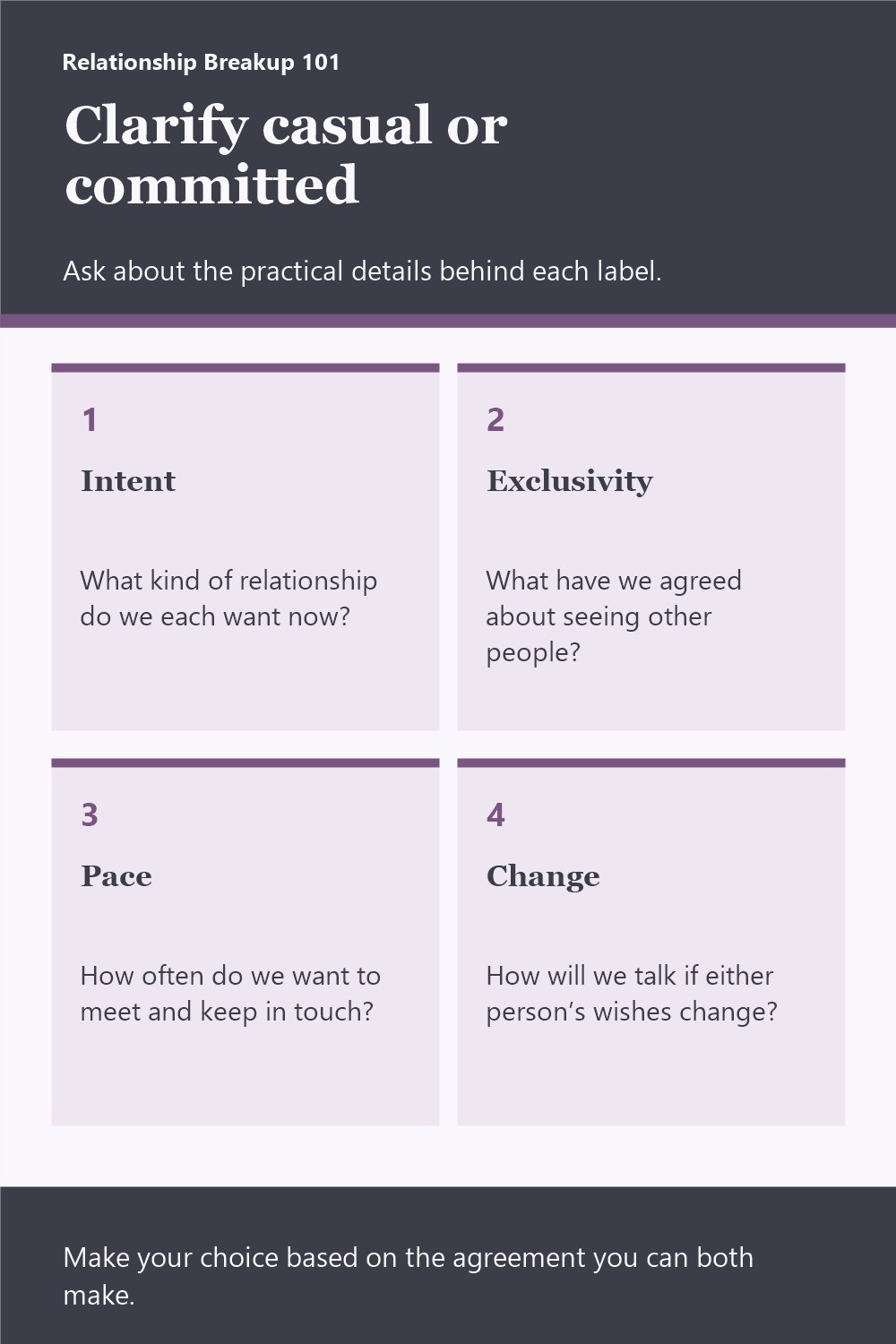
Read the infographic in text
Clarify casual or committed Ask about the practical details behind each label.
- Intent What kind of relationship do we each want now?
- Exclusivity What have we agreed about seeing other people?
- Pace How often do we want to meet and keep in touch?
- Change How will we talk if either person’s wishes change?
Make your choice based on the agreement you can both make.