

A relationship can feel distant when everyday life is crowded, routines become automatic or a concern goes unspoken. Before arranging a grand gesture, ask what kind of connection each of you is missing.
These ideas are options to discuss, not a requirement to repair everything yourself. Choose one that both people welcome, keep it manageable and notice how it feels in practice.
On this page
- Ask what feels different
- Make a small plan you can both keep
- Try something unfamiliar and comfortable
- Make an outing easier, not more demanding
- Choose a gesture the other person would welcome
- Keep room for separate interests
- Share a memory without forcing the mood
- Change one recurring frustration
- Notice whether the effort is mutual
1. Ask what feels different
Choose a calm moment: “I miss having time when we are really together. How have things felt to you?” Listen for their experience before proposing a solution.
One person may want conversation while the other needs rest or help with responsibilities. Name the actual concern so a date night does not become a substitute for addressing it.

2. Make a small plan you can both keep
Try a short walk, breakfast together or an unhurried cup of tea. Agree on a time and decide who will arrange what.
Keep the plan realistic for your energy, access needs and budget. Regular time that both people can manage may be more welcome than an ambitious outing one person has to organise alone.
3. Try something unfamiliar and comfortable
Choose a modest change: cook a different recipe, visit a nearby place or listen to music you each want to share.
Novelty does not require crossing a boundary, taking a risk or pretending to enjoy something. Offer two ideas and let either person suggest an alternative or say no.
4. Make an outing easier, not more demanding
If you want a day out or a trip, discuss the budget, travel, pace and responsibilities beforehand. Include time to rest.
A local afternoon can be enough. Travel is optional, and a holiday cannot be expected to settle an ongoing disagreement that needs its own conversation.
5. Choose a gesture the other person would welcome
A favourite snack, a kind note or taking care of an agreed task can show attention without creating a large expense.
Keep surprises easy to decline. Public announcements, unexpected guests, tickets or commitments may create pressure; check first when a plan affects someone’s time, privacy or choices.
6. Keep room for separate interests
Talk about how much shared and individual time feels workable. You can enjoy your own friends or hobbies without making closeness a competition.
Explain your plans and consider shared responsibilities. “I would like Saturday morning for my class; what arrangements would work for us?” is clearer than silently disappearing or assuming the other person will cover everything.
7. Share a memory without forcing the mood
If you both want to, revisit a favourite photo, place or story. Ask what each of you remembers and what made that time enjoyable.
You do not have to turn every painful memory into a lesson or a romantic moment. Leave difficult experiences for a conversation where they can receive proper attention.
8. Change one recurring frustration
Choose something concrete, such as who plans meals, how you divide a task or when you put phones aside. Agree on a change both people understand.
Check whether the arrangement works after trying it. Reliability includes noticing a missed agreement, discussing what happened and adjusting it rather than expecting one person to keep reminding the other.
9. Notice whether the effort is mutual
Ask, “What felt good, and what should we do differently?” You can keep an enjoyable idea, make it smaller or decide it was not useful.
If distance reflects incompatible goals, repeated disrespect or fear, more activities may not address the problem. Consider appropriate individual support. You are allowed to reassess the relationship, and another person’s harmful behaviour is not your responsibility to fix.
Read the infographic in text
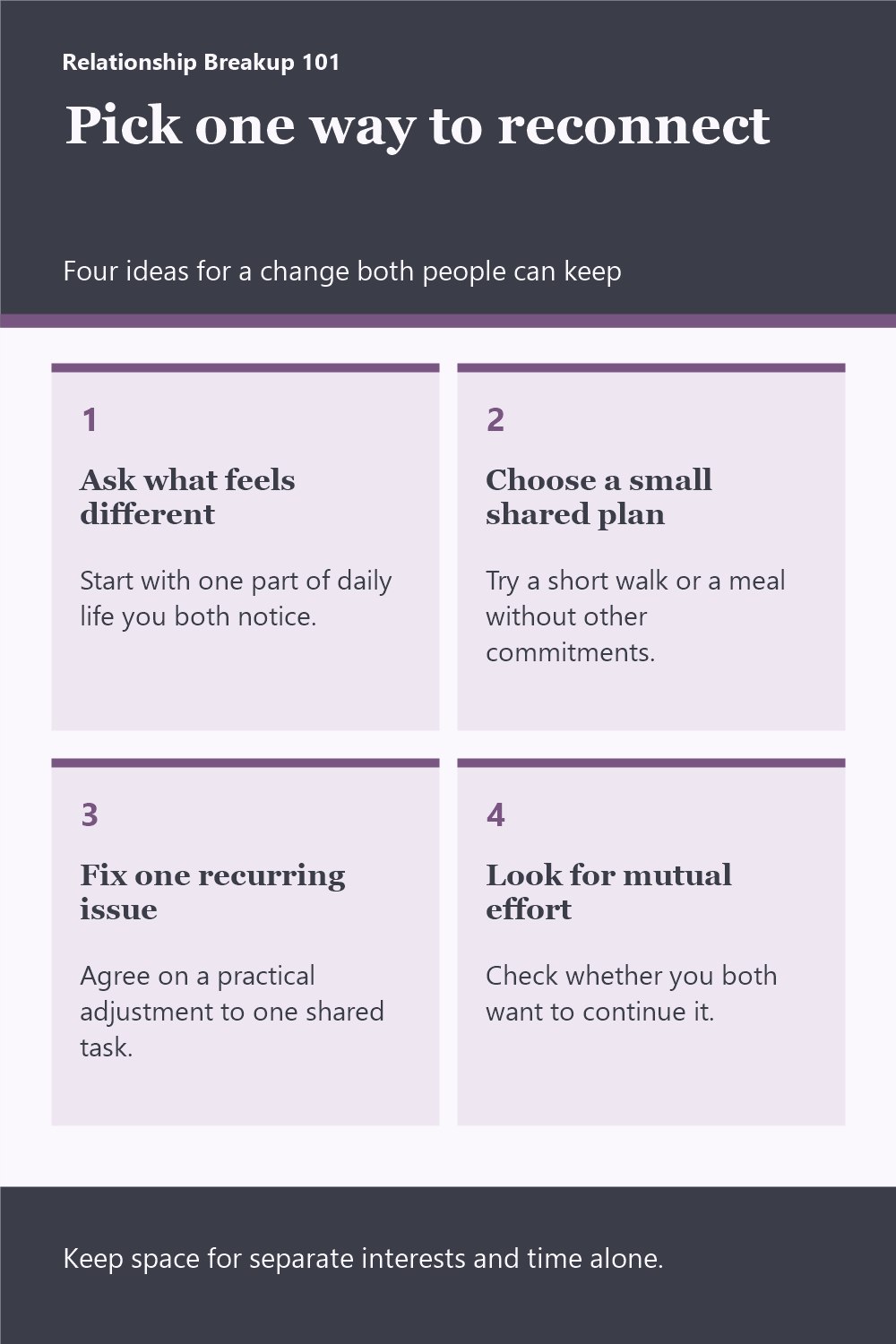
Pick one way to reconnect Four ideas for a change both people can keep
- Ask what feels different Start with one part of daily life you both notice.
- Choose a small shared plan Try a short walk or a meal without other commitments.
- Fix one recurring issue Agree on a practical adjustment to one shared task.
- Look for mutual effort Check whether you both want to continue it.
Keep space for separate interests and time alone.