

You may enjoy being together and still wonder whether your partner wants the same future. A holiday invitation, shared drawer or affectionate message can feel promising, but none of them answers every question about commitment.
Instead of trying to prove that you are “the one” for him, ask whether you both want a relationship that works for you. His intentions matter, and so do your wishes, timing and freedom to choose.
On this page
Separate a promising gesture from an agreement
Being introduced to friends, making plans or caring for you during a difficult week can show involvement. Notice these gestures as part of a pattern rather than treating one moment as a prediction of marriage.
A shared lease, pet or purchase creates responsibilities. It does not establish a shared relationship goal on its own. Before combining more of your lives, discuss what each commitment means and what practical obligations you are taking on.
Name the future you actually want
“Serious” can mean exclusivity to one person and living together to another. Start with your own meaning: an exclusive relationship, marriage, separate homes, parenting, or a partnership without children. You do not need to want every conventional milestone.
Consider which wishes are essential and which are flexible. You might be open about where to live while knowing that you want children. A future that depends on quietly abandoning an important wish deserves an honest conversation.

Ask directly, without turning it into a test
Choose an unhurried moment and try: “I value what we have, and I would like to understand how you see us. I am looking for a long-term partnership. What are you hoping for?” Give him space to answer in his own words.
If marriage matters, ask about it specifically: “Is marriage something you want, and is that a possibility you are considering with me?” A discussion about marriage is useful information, not a guarantee that a proposal will happen. Avoid manufacturing jealousy, withdrawing affection or staging a crisis to get reassurance.
Look for follow-through in ordinary life
Compare what has been said with what happens next. If you agreed to discuss living arrangements, does that conversation take place? If plans change, can you both explain the change and make a new agreement? Reliability includes being honest about limits.
Care does not require him to give up a career opportunity, share every possession or put you ahead of every other relationship. Look for mutual consideration: decisions that affect you are discussed, and neither person is expected to carry all the inconvenience.
Make room for uncertainty without waiting indefinitely
An uncertain answer can be sincere. Ask what remains unclear and what would help you each decide. You can agree on a time to return to the conversation without treating that date as a deadline for an engagement.
You are also allowed to decide that the available relationship does not meet your needs. “I care about you, but I want a commitment you are not offering” is a statement about compatibility. It does not require proving that either of you is a bad person.
Keep your choice in the picture
Ask yourself how you feel about the relationship you have now, rather than only the future you hope it will become. Can you disagree, say no, keep friends and pursue your own goals? Do both people contribute to resolving problems?
If you feel pressured to prove your worth by tolerating humiliation, control or threats, focus on support and safety rather than securing a commitment. If the relationship feels respectful but the future is unclear, one calm conversation may give you a more useful next step than another list of hidden signs.
Ask about a future choice instead of waiting for a hint
If your partner talks about moving but you don’t know whether they imagine doing it with you, ask directly. “Are you thinking about a move on your own, or would you like us to talk about living in the same place?” helps you find out what planning they want to share.
Take the answer seriously and ask what you each need in the meantime. You can welcome closeness and still decide whether a future plan feels clear enough for you.
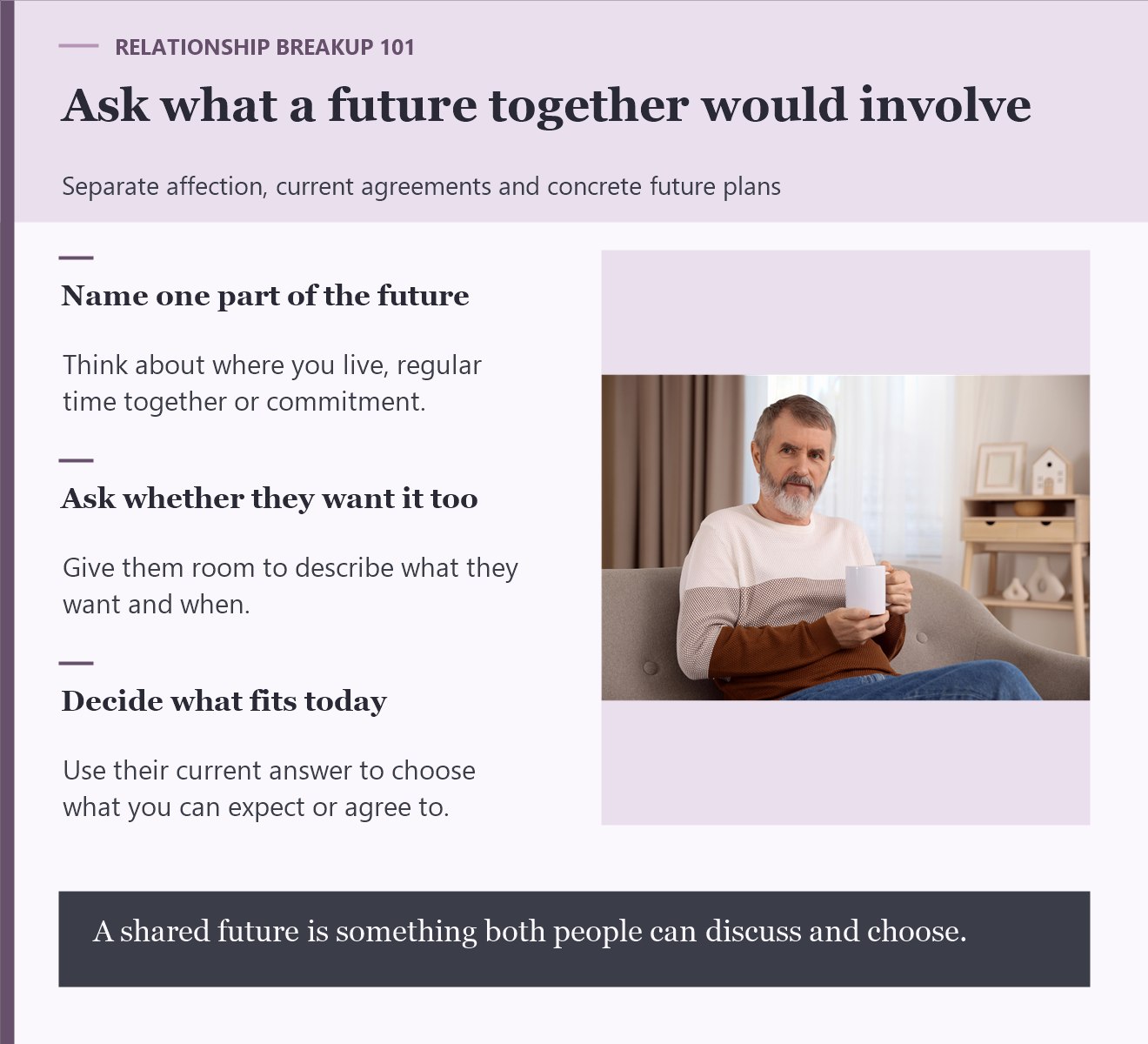
Read the infographic in text
Ask what a future together would involve
Separate affection, current agreements and concrete future plans
- Name one part of the future Think about where you live, regular time together or commitment.
- Ask whether they want it too Give them room to describe what they want and when.
- Decide what fits today Use their current answer to choose what you can expect or agree to.
A shared future is something both people can discuss and choose.