

“Are we meant to be?” can hold several questions: Do they care about me? Can I trust this relationship? Do we want the same life? A connection may feel deeply meaningful without giving you a reliable answer about its future.
If destiny or a spiritual understanding of love matters to you, you can keep that meaning while considering how the relationship works in everyday life. You are still free to ask questions, maintain boundaries and decide whether to continue.
On this page
- Notice a connection without making it a prediction
- Look for care that leaves room for both people
- Discuss the future rather than assuming it
- Build trust without demanding total access
- Keep boundaries even when you feel close
- Consider how you handle problems
- Take safety concerns seriously
- Choose the next step you can actually take
Notice a connection without making it a prediction
Remembering your coffee order, sharing news or missing each other can feel affectionate. These moments tell you something about your experience now; they do not prove that a relationship must last or that a particular person is your only chance at love.
You do not have to feel excited every day or miss someone every hour. Look beyond a single romantic moment or a quiet week and ask whether the connection has room for both people as they actually are.
Look for care that leaves room for both people
Can you describe what matters to you and feel heard, even when your partner has a different view? Care may look like listening, asking what would help, sharing a responsibility or remembering an agreement. It also includes being honest when a request is beyond what someone can offer.
A partner does not have to share every dream or become your only source of support. Keep friendships, interests and other trusted relationships. Being close can include having separate plans and enjoying time apart.

Discuss the future rather than assuming it
Talk about the choices that would shape a shared life: children, where to live, money, exclusivity, family responsibilities and commitment. You can start with one question: “When you imagine the next few years, what do you hope your relationship will look like?”
Notice whether your plans have room for both people’s needs. Family approval, a long history or the fear of being alone cannot settle a disagreement about something essential. You can care about someone and still want different futures.
Build trust without demanding total access
Trust involves honesty and keeping relevant agreements. It does not require sharing passwords, explaining every private thought or revealing painful personal experiences before someone is ready. You can ask for clarity about a concern without demanding access to every part of a person’s life.
If something has damaged trust, identify what happened and what change would be needed. Look for accountable behaviour over time rather than using a promise, a strong feeling or a symbolic sign to decide that the concern is resolved.
Keep boundaries even when you feel close
A strong bond does not make boundaries disappear. You can say no to sex, ask for privacy, choose who you spend time with and disagree about a decision. Your partner has the same rights.
Notice how a limit is received. Respect includes accepting an answer without ridicule, threats, repeated pressure or punishment. Openness is meaningful when it is freely chosen; it is not something you owe to prove that you belong together.
Consider how you handle problems
Disagreement by itself does not answer whether a relationship is right for you. Consider whether you can raise a concern, take a pause when needed and return to the issue respectfully. Can you agree on a specific change and notice whether it happens?
The NHS guidance on relationships and wellbeing includes ideas for listening, setting boundaries and approaching conflict. If a conversation repeatedly leaves you frightened or unable to say what you think, seek support rather than treating better wording as the whole solution.
Take safety concerns seriously
Humiliation, threats, monitoring, coercion or physical harm deserve attention regardless of how special the connection feels. You do not have to wait for certainty about someone’s motives or your future before seeking help.
Listen when a trusted person describes a specific concern, while keeping your own experience in view. If there is abuse, a specialist can help you consider options that fit your circumstances. The US National Domestic Violence Hotline provides personal safety-planning information; use a local service where you live.
Choose the next step you can actually take
Try three notes: “What is working,” “What needs a conversation,” and “What I cannot accept.” Include concrete examples. You may decide to ask a question, make an agreement, take time to think or leave the relationship with appropriate support.
You do not need proof of destiny to choose a respectful relationship. You also do not need proof that a relationship was meaningless to decide that it no longer works for you. Let the meaning you find in love sit alongside your consent, judgment and freedom to choose.
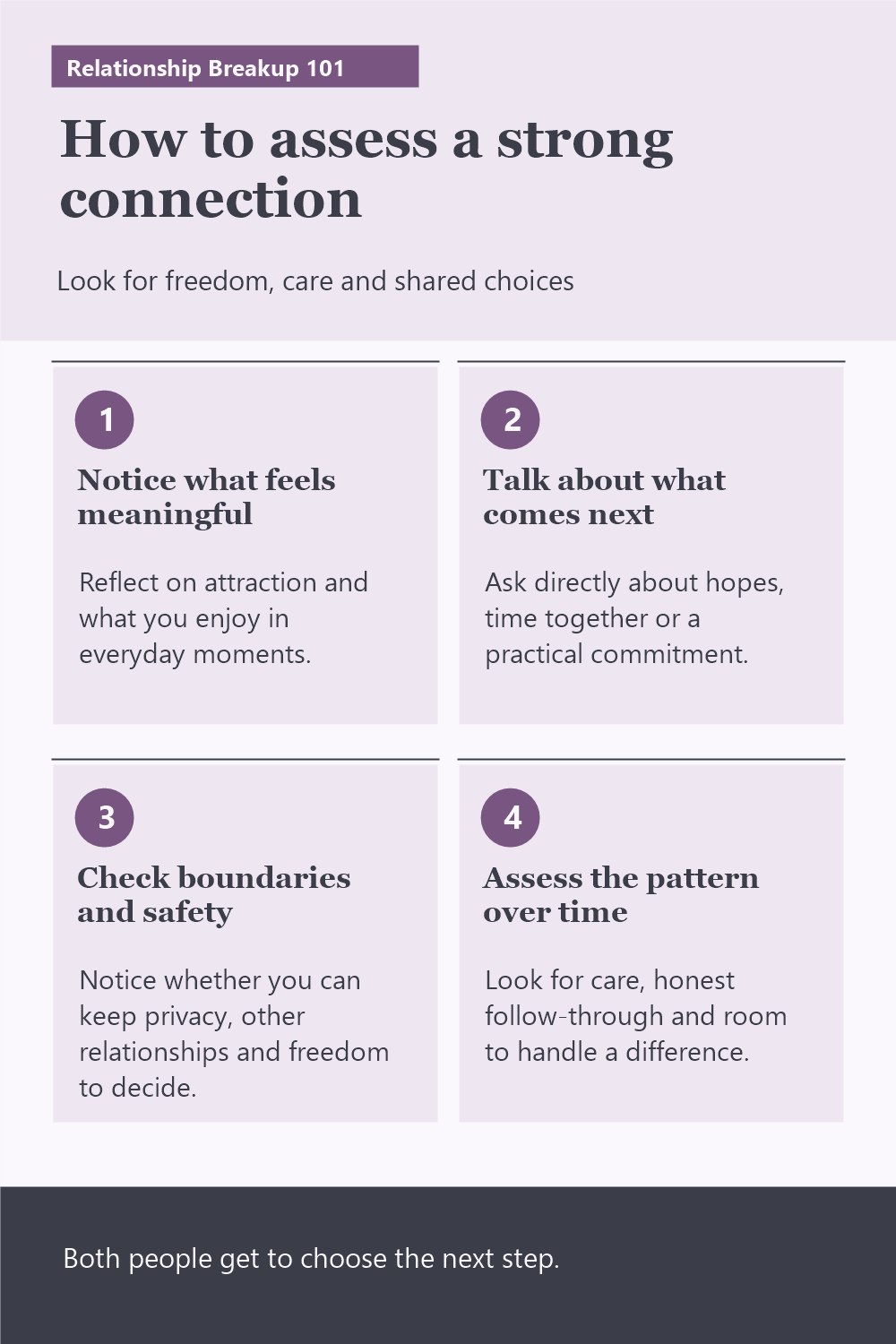
Read the infographic in text
How to assess a strong connection
Look for freedom, care and shared choices
- Notice what feels meaningful Reflect on attraction and what you enjoy in everyday moments.
- Talk about what comes next Ask directly about hopes, time together or a practical commitment.
- Check boundaries and safety Notice whether you can keep privacy, other relationships and freedom to decide.
- Assess the pattern over time Look for care, honest follow-through and room to handle a difference.
Both people get to choose the next step.