

A breakup can be difficult even when you believe it is the decision you want. Being kind does not guarantee that either person will feel okay immediately. You may be ending familiar routines, a source of companionship and a future you once imagined.
Instead of asking why you cannot make it easy, ask which part is hardest. Emotional pain, practical arrangements and fear of a partner’s behaviour call for different kinds of support.
On this page
You may be grieving more than the relationship
You might miss daily messages, shared friends, a home or plans that gave the future shape. Some losses become noticeable only after a familiar moment arrives and the usual person is no longer there.
The NHS guidance on grief and loss includes the end of a relationship. Feelings can vary, and there is no requirement to follow a neat sequence. Talk with someone you trust or seek professional support if coping is becoming difficult.

Guilt can make a clear decision feel cruel
It can hurt to disappoint someone you care about. You may be tempted to stay until you can find an explanation that will leave them happy. That explanation may not exist, even when your decision is honest and considered.
Consider what care you can actually offer: clarity, appropriate notice about arrangements and respectful words where it is safe. Avoid promising a future reunion or unlimited availability just to relieve guilt in the moment. You cannot decide how quickly another person feels ready to move on.
An uncertain future can feel larger than the next step
You may worry about being alone, dating again or whether you will regret leaving. Trying to solve every future question at once can make even a practical decision feel overwhelming.
Bring the task closer. What would support you this evening or this week? A meal with a friend, a manageable routine or one appointment can be more useful than demanding certainty about your whole future. Missing someone does not require making an immediate decision to reunite.
Shared responsibilities need actual arrangements
Housing, bills, care, children or pets can keep two lives connected after the romantic relationship ends. Those needs are not simply emotional reluctance. They may require time, resources and qualified local advice.
Write down what needs attention first and who can help. Separate a logistical conversation from repeated debate about the breakup decision. You do not need to pretend that every tie can be cut at once in order to take your own wishes seriously.
Fear deserves support beyond breakup etiquette
If you fear threats, monitoring, retaliation or being prevented from leaving, the problem is not a lack of courage or a poor choice of words. A domestic abuse service can help you consider a personal safety plan and practical options.
You do not have to confront your partner alone or announce your plans before asking for help. If there is immediate danger, contact local emergency services when safe. Otherwise, begin with one trustworthy person or service and describe the concern that makes leaving feel frightening.
Make room for the loss of an ordinary routine
You might miss evening messages even if you feel certain the relationship had to end. Pick one evening and plan something steady, such as making dinner with a friend or setting aside time to do something familiar.
If what you miss is a plan for the future, give yourself some time before making another large decision. Talk with someone who can listen to both the good parts you miss and the reasons it ended.
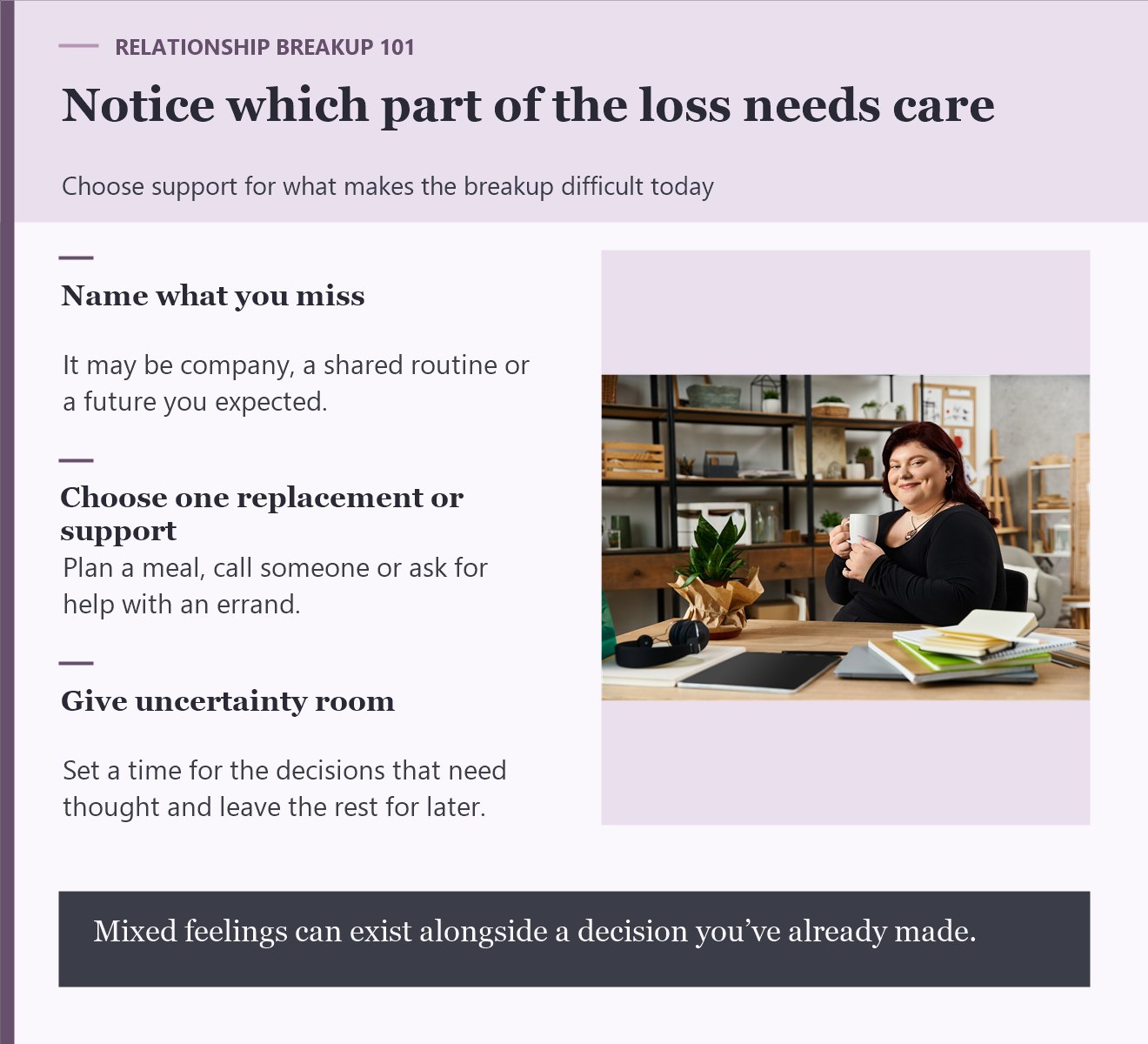
Read the infographic in text
Notice which part of the loss needs care
Choose support for what makes the breakup difficult today
- Name what you miss It may be company, a shared routine or a future you expected.
- Choose one replacement or support Plan a meal, call someone or ask for help with an errand.
- Give uncertainty room Set a time for the decisions that need thought and leave the rest for later.
Mixed feelings can exist alongside a decision you’ve already made.