

Different needs for time together can become a serious mismatch. You may want more independence, or you may have decided that you no longer want the relationship. Neither decision requires describing your partner as needy or proving that their wish for closeness is wrong.
If you have decided to end things, aim for a clear message and workable next steps. You can be considerate without promising unlimited contact, an immediate friendship or another chance you do not want.
On this page
Separate a request for space from a breakup decision
Ask yourself what you are actually asking for. Do you want to continue dating with different expectations about calls and time together? Are you uncertain and asking for time to think? Or have you decided to end the relationship?
Use words that fit that answer. Saying “I just need some space” when you mean “I am ending the relationship” can leave the other person waiting for a return you do not intend. You do not need perfect certainty about every feeling to be honest about your decision.

Choose a format that fits your circumstances
A conversation may give both people room to speak. A call or written message may be more suitable when distance, accessibility, difficulty expressing yourself or safety affects what you can manage. There is no single format that makes every breakup respectful.
If you fear threats, retaliation or being prevented from leaving, seek individual support before arranging a meeting. Do not create a private face-to-face encounter merely to satisfy an etiquette rule. The related guides below cover planning when leaving feels difficult.
Prepare a brief, honest message
A possible starting point is: “I’ve decided to end our relationship. I know this is painful, and I’m sorry that my decision hurts. I don’t want to continue dating.” Adapt the wording so it is true for you.
You can explain a relevant reason without presenting a list of personal faults. Avoid claiming that the other person secretly wants the breakup too, or offering a reunion to stop them feeling upset. A clear message can still be gentle.
Decide what practical contact is needed
Belongings, a shared home or other responsibilities may require communication after the breakup. Where it is safe and workable, specify the topic, channel and next action: “Please email me about collecting your books. I can arrange a time on Saturday.”
Keep practical arrangements separate from deciding whether to date again. Shared parenting, property or tenancy questions may need qualified local advice. Do not promise an immediate clean separation if there are real arrangements still to make.
Respond to repeated questions without reopening the decision
Your partner may ask why or want more time to talk. You can acknowledge that pain and decide how much conversation you can offer. For example: “I understand you want another conversation. My decision is still to end the relationship, and I’m going to finish this call now.”
A boundary is about what you will do; it cannot force someone to feel ready. Avoid checking in repeatedly for reassurance that they are fine if doing so creates renewed hope. If unwanted contact becomes threatening, seek appropriate local support rather than handling it alone.
Build support for the days afterward
Arrange something ordinary and manageable: time with a friend, a meal, sleep or a plan for the first evening. Missing the person or feeling guilty does not automatically mean your decision was mistaken. Give yourself room to notice those feelings without making a promise in the moment.
The NHS relationship guidance discusses boundaries and outside support. You can reflect on what you would do differently while respecting both people’s right to move forward.
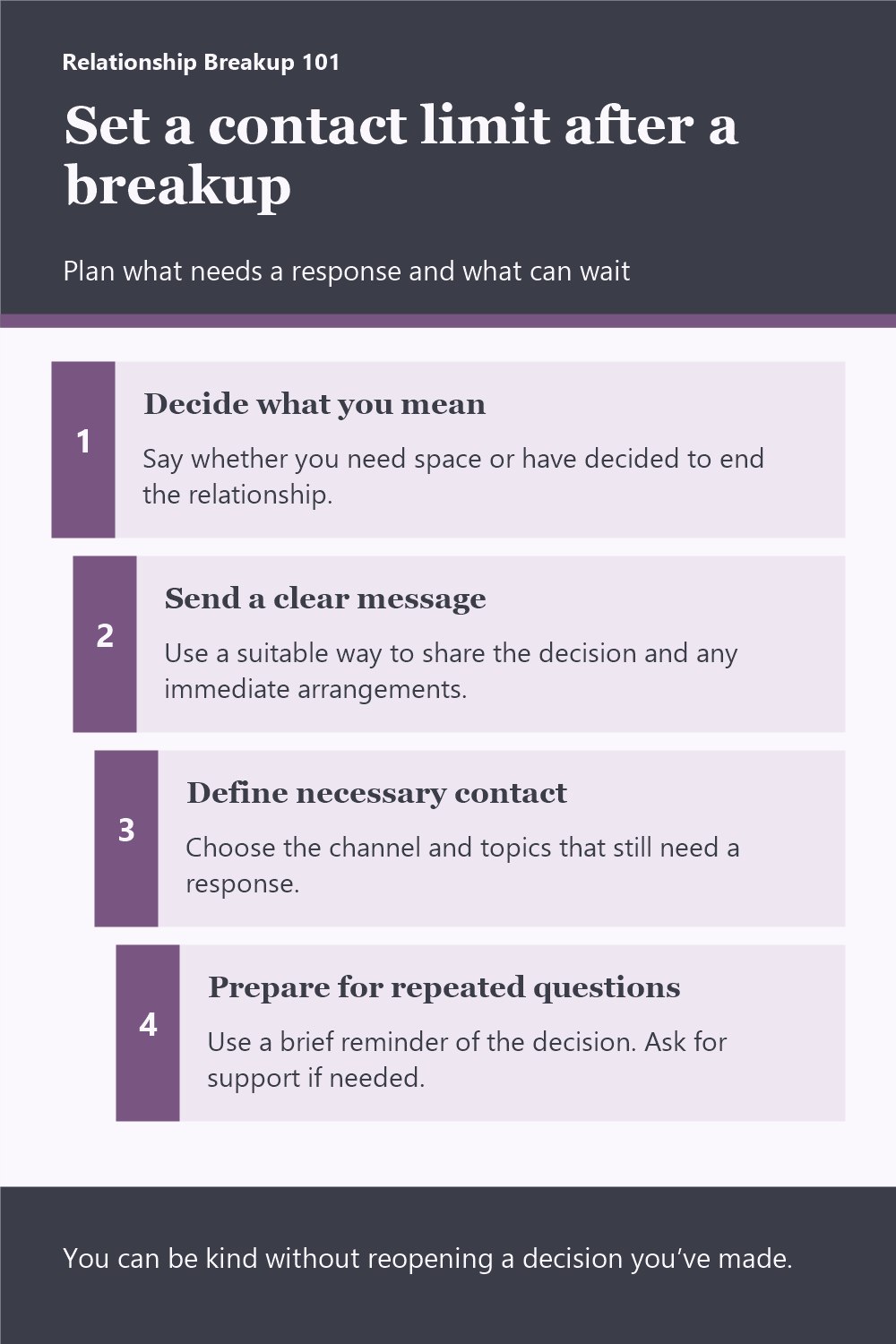
Read the infographic in text
Set a contact limit after a breakup
- Decide what you mean Say whether you need space or have decided to end the relationship.
- Send a clear message Use a suitable way to share the decision and any immediate arrangements.
- Define necessary contact Choose the channel and topics that still need a response.
- Prepare for repeated questions Use a brief reminder of the decision. Ask for support if needed.
You can be kind without reopening a decision you’ve made.