

It is hard to watch a friend become unhappy, isolated or frightened in a relationship. You may want to solve everything immediately. A more useful starting point is to help them feel heard and able to make their own decisions.
You do not need to decide whether their partner fits a label before offering care. Focus on what your friend describes, what they want and whether your actions could affect their safety.
On this page
Open a conversation without demanding an explanation
Choose a private opportunity and describe something you have noticed: “You seemed worried about going home yesterday. How are you doing?” Ask whether they want to talk, and accept it if they are not ready.
Avoid an interrogation, a diagnosis of their partner or “I told you so.” A small, calm invitation may be easier to accept than a conversation that makes them defend the whole relationship.
Listen and take their concerns seriously
Let your friend finish. You can say, “That sounds frightening,” or “You don’t deserve to be treated that way.” Ask what would be helpful now: listening, company, information or assistance with a specific task.
The National Domestic Violence Hotline’s guidance on discussing abuse emphasizes support without blame or pressure. Do not make continued friendship conditional on leaving the relationship.

Ask what contact is safe
Before sending sensitive information, ask whether messages, calls or visits could create a problem. A shared device, notification preview or account may expose a conversation. Agree on what is safe to send and when to make contact.
Do not add your friend to a support group, reveal their situation online or contact their partner without consent. If you agree on a code word, also agree exactly what it means and what you should do; do not assume you share the same plan.
Offer help you can realistically provide
A specific offer is easier to assess than “Let me know if you need anything.” You might offer a lift to an appointment, a meal, company while making a call or help finding accessible local resources. Ask first, and let your friend decline.
Be clear about your limits, including money, transport or temporary accommodation. Do not promise help you cannot sustain, or make yourself their only source of support. Additional trusted people and specialist services can share the practical load.
Support planning without taking over
If your friend fears their partner, encourage contact with a domestic abuse service from a safer device when possible. A specialist can help consider choices while staying, preparing to leave or after separation. Leaving does not need to be announced to the partner for you to take the concern seriously.
Avoid confronting the partner, setting a surprise intervention or arranging a final meeting on your friend’s behalf. If there is immediate danger, contact local emergency services when safe. Do not promise absolute secrecy if someone’s life is at immediate risk.
Keep ordinary friendship available
Continue offering ordinary connection: a walk, a shared meal or a brief check-in using the contact method you agreed was safe. Your friend may want time together without discussing the relationship on every occasion.
They may change their mind, return to the relationship or need more time than you expected. You can express concern honestly without shaming them. Ask whether the support they need has changed rather than treating the previous conversation as a broken promise.
Look after your own capacity to help
You are allowed to rest and set limits: “I can talk tonight for half an hour, and tomorrow I can help find another person or service.” Support does not require being constantly available or putting yourself in danger.
If your friend wants help with breakup wording, offer the guide to writing a breakup letter or the example letters and boundaries, after checking those options suit their circumstances. Your role is to stand alongside them, while they retain a voice in what happens next.
Read the infographic in text
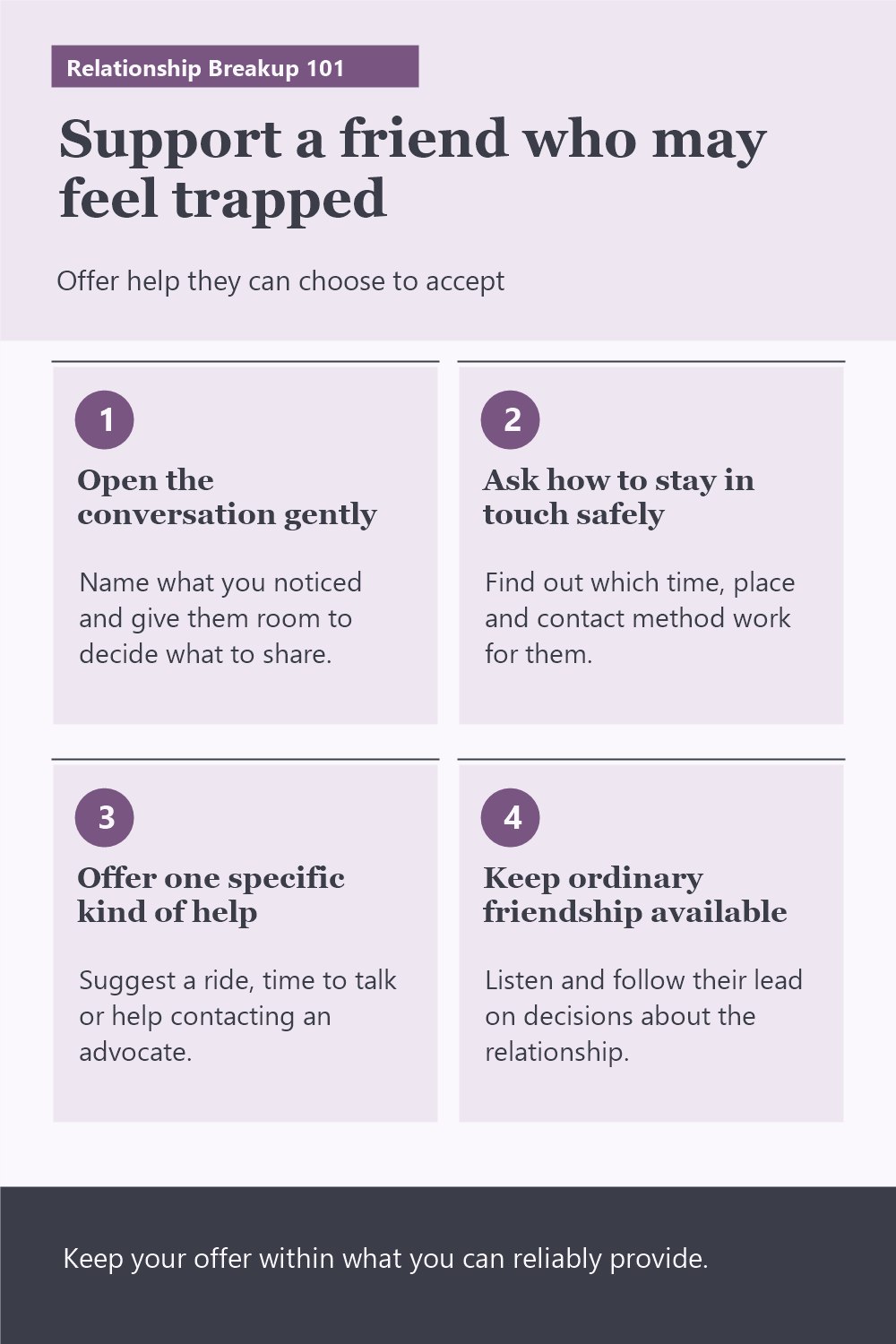
Support a friend who may feel trapped
Offer help they can choose to accept
- Open the conversation gently Name what you noticed and give them room to decide what to share.
- Ask how to stay in touch safely Find out which time, place and contact method work for them.
- Offer one specific kind of help Suggest a ride, time to talk or help contacting an advocate.
- Keep ordinary friendship available Listen and follow their lead on decisions about the relationship.
Keep your offer within what you can reliably provide.