

Leaving a relationship involves both a decision and the arrangements that follow it. You can decide that you do not want to continue even if your partner wants to stay together. You do not need to prove that the relationship was terrible or persuade someone to give permission.
That choice can still involve grief, uncertainty and practical responsibilities. Shared housing, children, finances, disability or caring needs may make a plan essential. Start with what you need in order to act, rather than an ideal version of a breakup.
On this page
State your decision to yourself before planning the conversation
Try completing a clear sentence: “I want to end this relationship,” or “I am uncertain and need to consider these specific issues.” Neither requires you to predict how you will feel forever. It does help to distinguish a definite ending from a request to change something.
If guilt is the main obstacle, separate care from a promise to remain a partner. You can care about someone’s wellbeing while deciding not to continue the relationship. You cannot guarantee they will accept the news calmly or recover on a schedule.

Work through the practical essentials
Consider where you can stay, how you will travel, access to money, medication, documents and necessary care. Ask for specific help where possible. A trusted person may be able to assist with transport or finding services even if they cannot provide housing.
Shared tenancies, property, parenting and financial arrangements can involve obligations that do not end with the romantic relationship. Get appropriate independent advice for your location before making major decisions about those matters. Do not use children as messengers or ask them to choose sides.
Choose the communication method around safety
An in-person conversation can suit some situations, but it is not a test of decency. A phone call, message or supported arrangement may be more appropriate if meeting creates a risk. Do not arrange a private meeting merely to follow generic breakup etiquette.
If there has been abuse, monitoring, stalking or intimidation, consider talking with a specialist service before announcing your plans. The National Domestic Violence Hotline’s safety-planning resource can help you think about the situation. Consider a safer device if yours may be monitored, and contact local emergency services for immediate danger.
Use clear words and limits you can keep
You might say: “I have decided to end our relationship. I am willing to discuss collecting belongings and the bills we share, but I am not asking to try again.” Keep the statement accurate; do not offer a temporary break if you mean a final ending.
You can answer a reasonable question without continuing an argument indefinitely. If the exchange becomes threatening or overwhelming, end it and use a safer way to handle necessary arrangements. You do not have to make your partner agree that you have explained enough.
Separate necessary arrangements from emotional contact
Make a short list of what still needs to happen, who is responsible and which communication channel is workable. Confirm practical agreements in writing when useful and safe. A neutral third party or professional support may help with a difficult handover.
You may need a pause from personal messages while still discussing parenting or another shared obligation. Explain what contact you can manage rather than making a promise you cannot keep. If unwanted contact or threats continue, seek specialist advice about your options.
Arrange support for the days afterwards
Choose a manageable first-day plan: food, somewhere to sleep, essential tasks and one person you can contact. Allow mixed feelings without treating every difficult evening as proof that leaving was a mistake. Revisit your reasons and the facts of the relationship when you need perspective.
If distress makes daily life hard or feels unmanageable, ask a qualified professional for support. Practical services can also matter as much as a conversation. You do not have to solve housing, loneliness and every shared responsibility at once; identify the next necessary step.
Choose one private step when several things are uncertain
If you need to leave and you’re worried about where you would go, ask a trusted person or advocate what help is available. Think about which details you can safely discuss and whether you need a private device or place to talk.
In Canada, see the family violence support directory. In the U.S., the National Domestic Violence Hotline explains ways to make a plan that fits your situation.
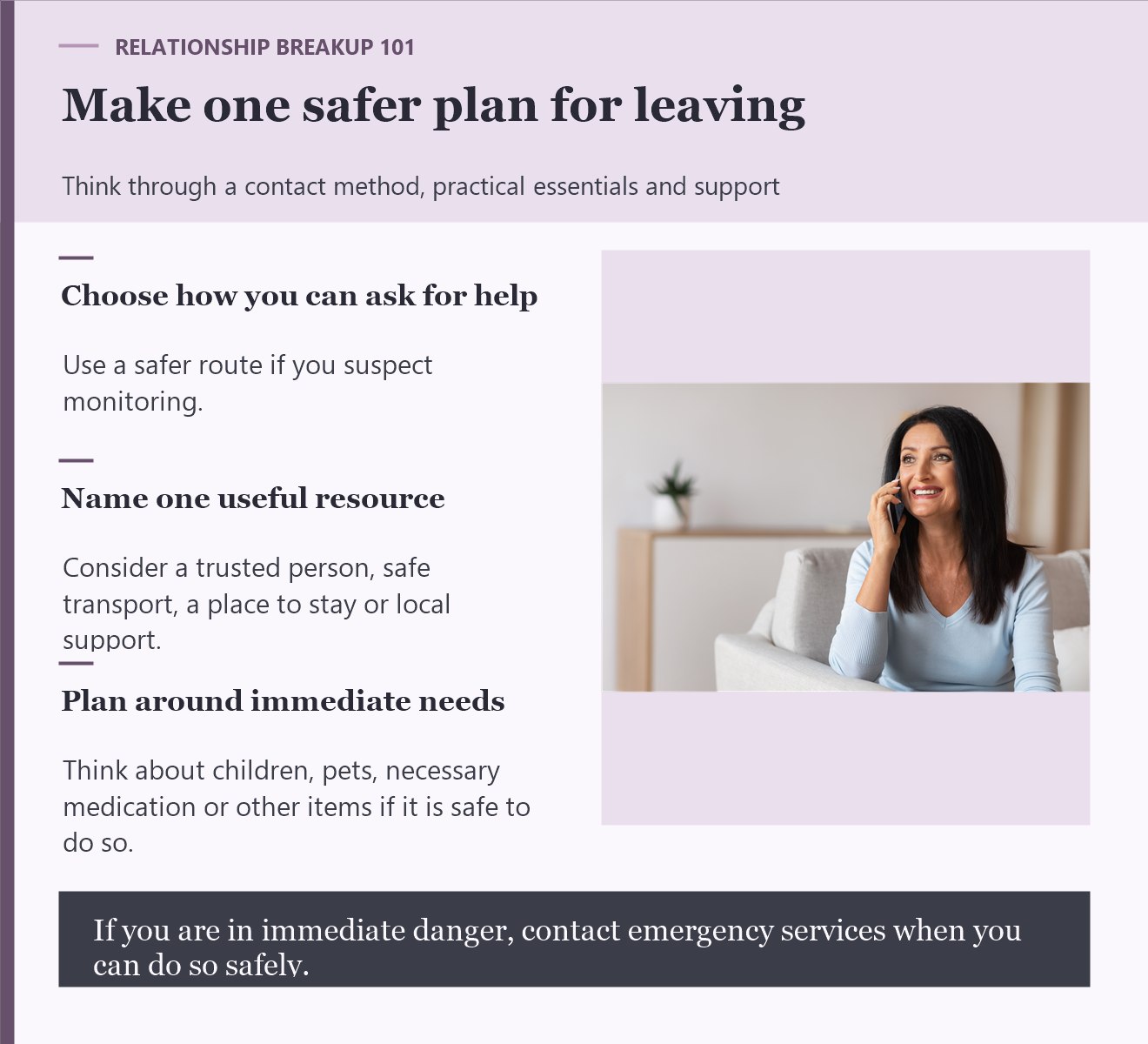
Read the infographic in text
Make one safer plan for leaving
Think through a contact method, practical essentials and support
- Choose how you can ask for help Use a safer route if you suspect monitoring.
- Name one useful resource Consider a trusted person, safe transport, a place to stay or local support.
- Plan around immediate needs Think about children, pets, necessary medication or other items if it is safe to do so.
If you are in immediate danger, contact emergency services when you can do so safely.