

A breakup often involves two different tasks: telling someone that the relationship is ending and handling the practical changes afterward. Thinking about both can help you avoid a conversation that leaves essential arrangements unclear.
You do not need a perfect reason or a moment when nobody will be hurt. You can still give yourself time to consider safety, responsibilities and the support you may need.
On this page
Plan a workable time rather than waiting for a perfect one
If you have made your decision, think about what needs to be in place before you communicate it. That might include somewhere to stay, your own transport, support with childcare or access to essential medication and documents.
An upcoming birthday or work deadline can make timing feel difficult, but it does not create an obligation to continue a relationship. Equally, you do not have to act immediately when preparation would make leaving safer or more practical. Choose a next step suited to your circumstances.
Choose the communication method with safety in mind
An in-person conversation is one option when it feels safe and appropriate. Phone, video or a clear message may be better for distance, a brief relationship or concerns about how the other person will react. Courtesy does not require meeting alone.
If there has been abuse, stalking or intimidation, seek individual help with a safety plan. The National Domestic Violence Hotline’s planning resource offers questions to consider. If you think your internet use is monitored, use a safer device when seeking help.

Prepare a short message you actually mean
Write down the essential point before the conversation: “I have decided to end our relationship.” You can add a brief explanation, such as no longer wanting the partnership or needing a different future. You do not have to provide a catalogue of faults.
Avoid offering a temporary break, friendship or a possible reunion unless that is genuinely what you want to discuss. A clear ending can be kinder than reassurance that creates an expectation you do not intend to meet.
Keep the decision separate from a debate and the practical tasks
The other person may disagree or ask you to reconsider. You can acknowledge that the news is painful and repeat the decision without arguing until they accept it. If the conversation becomes threatening or insulting, end it and seek support.
Then identify the arrangements that need attention: keys, belongings, housing, bills, pets or shared commitments. You do not have to settle them all at once. For parenting, tenancy or financial questions, obtain local advice appropriate to those responsibilities rather than relying on the breakup conversation alone.
Agree on necessary contact and give yourself support
Decide whether personal contact should stop, pause or remain limited. If there are shared responsibilities, keep a channel for those topics and set realistic expectations about replies. Friendship is optional and does not have to be decided immediately.
Arrange something manageable for after the conversation: a trusted person to call, a meal or a place to rest. You may feel relief and grief together. Allow time to adjust, and ask for help if practical demands or distress become more than you can manage alone.
Write a short opening and a clear ending
If you want to say it in person and that feels safe, start with “I’ve decided to end the relationship.” Give them time to hear it. If shared belongings need a decision, suggest one practical way you can arrange it later.
Consider how you’ll end the conversation if it becomes circular. You can say “I’m going to go now. We can discuss the remaining details on Wednesday” if that is genuinely what you want.
Read the infographic in text
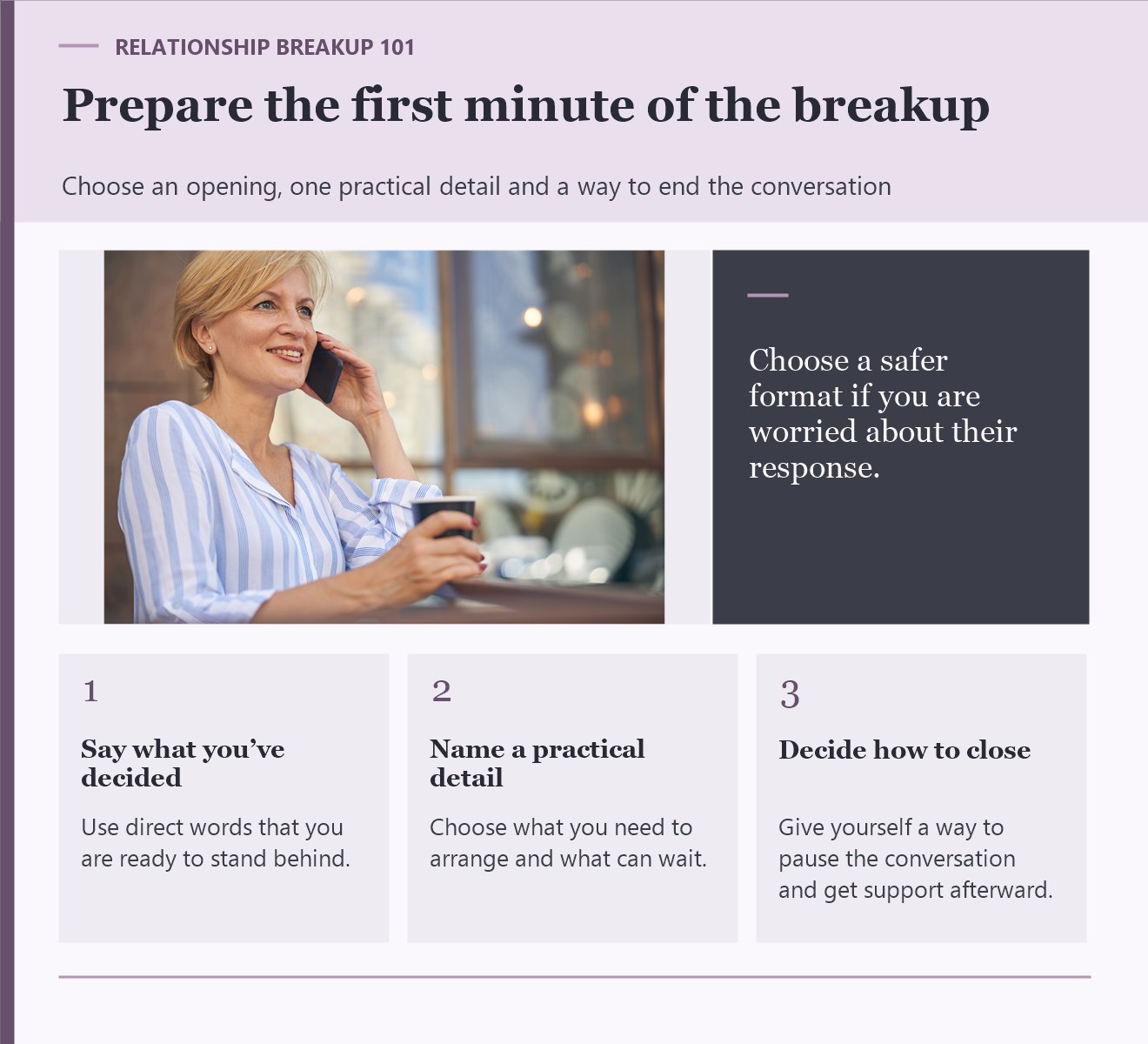
Prepare the first minute of the breakup
Choose an opening, one practical detail and a way to end the conversation
- Say what you’ve decided Use direct words that you are ready to stand behind.
- Name a practical detail Choose what you need to arrange and what can wait.
- Decide how to close Give yourself a way to pause the conversation and get support afterward.
Choose a safer format if you are worried about their response.