

You can end a dating relationship because you no longer want to continue it. You do not need to establish that your girlfriend is a bad person, find a dramatic betrayal or obtain agreement that your reasons are good enough.
That freedom sits alongside care for how you communicate and any responsibilities you share. A breakup may hurt even when it is handled thoughtfully. The aim is to be clear, avoid needless cruelty and make workable arrangements.
On this page
1. Separate your decision from a verdict on her worth
Try naming your own position in a sentence: “I no longer want to continue this relationship.” You might have incompatible plans, changed feelings or needs you have not been able to resolve. You can explain what matters without building a case that she is unlovable or at fault.
If you are still uncertain, distinguish wanting to leave from wanting a particular problem to change. Think about what you actually want now. Do not use a breakup threat as a way to obtain more attention or win an argument.

2. Let guilt inform your care, rather than make promises
Feeling guilty does not automatically mean the decision is wrong. You may care deeply about your girlfriend and still not want a romantic future together. Consider whether you are staying freely or mainly trying to prevent every painful feeling she might have.
Avoid offering a possible reunion simply to soften the moment if you do not mean it. You can say, “I know this is painful, and I am sorry it hurts,” while keeping the decision clear. Kindness does not require pretending that the relationship is continuing.
3. Make practical arrangements where your lives overlap
Shared housing, possessions, bills, pets or care responsibilities can make leaving complicated. Write down what needs an arrangement, which matters are urgent and what information you still need. Ending the romance does not by itself settle a lease, a debt or parenting responsibilities.
Keep these discussions specific. A proposed time to collect belongings is clearer than “We will sort everything out.” Where legal or financial obligations are involved, obtain qualified local advice before assuming that either person can make changes alone.
4. Choose a suitable way to communicate
A private, direct conversation may suit a relationship where both people can speak safely. A phone call or clear message can also be appropriate, particularly when distance, unwanted contact or fear makes meeting unsuitable. There is no universal rule that you must end a relationship face to face.
If you expect threats, monitoring or intimidation, seek support before arranging contact. You do not have to meet alone to demonstrate respect. Consider what communication method and practical support would make the next step safer.
5. Use clear words without a catalogue of criticism
You might say, “I have thought about this, and I have decided to end our relationship. I do not want to keep dating. We need to arrange how to return our belongings.” Adapt the wording so it is honest and sounds like you.
You can hear that she is upset without repeatedly defending the decision or comparing her with someone else. Give a truthful explanation where useful, but avoid unnecessary comments about her appearance, personality or supposed future chances of finding love.
6. Set realistic limits after the conversation
Decide what contact is needed for practical matters and what contact you do not want. Do not offer daily emotional support or immediate friendship just because it feels easier to promise in the moment. Both people may need space to work out what is manageable.
If a boundary is ignored, keep your response brief and consistent, and seek support if the contact becomes threatening or persistent. You can take the effect of the breakup seriously while maintaining your choice to end the relationship.
Give your decision and the practical details separate time
You can tell someone you have decided to end the relationship and offer to arrange the return of belongings later. It can help to separate what you’ve decided from the feelings you both may need time to process.
If you share a lease, pets or other responsibilities, decide what needs attention now and what can wait for another conversation. If you fear their reaction, choose a safer way to communicate and get support.
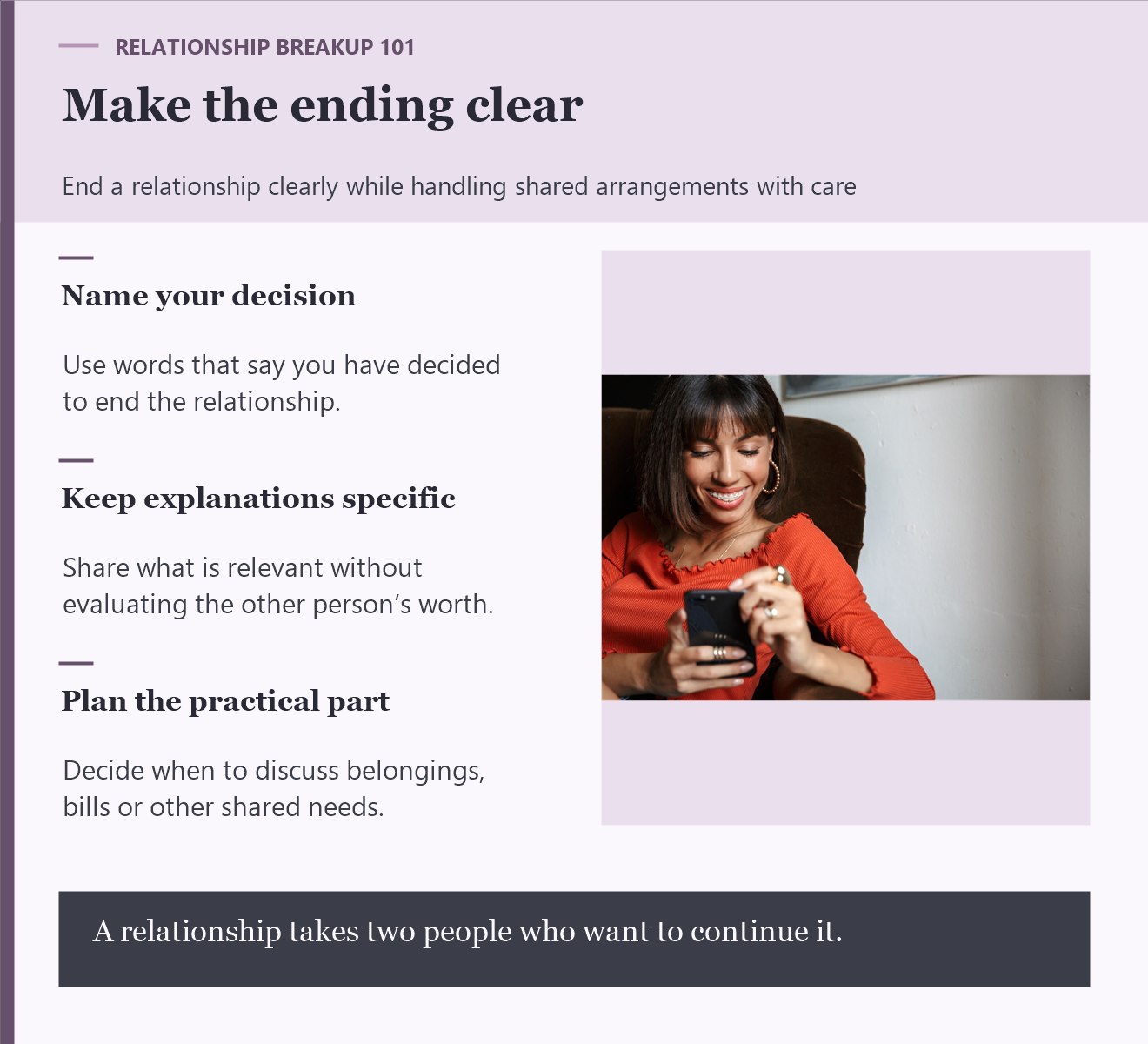
Read the infographic in text
Make the ending clear
End a relationship clearly while handling shared arrangements with care
- Name your decision Use words that say you have decided to end the relationship.
- Keep explanations specific Share what is relevant without evaluating the other person’s worth.
- Plan the practical part Decide when to discuss belongings, bills or other shared needs.
A relationship takes two people who want to continue it.