

After a breakup, a product promising the right message or a reliable reunion can feel reassuring. Before paying, separate what a guide can provide from what the seller cannot control: your ex’s feelings, choices and willingness to reconnect.
A purchase is not a route around someone’s refusal. Evaluate any book, coaching package or course by its actual content, terms and respect for both people’s boundaries.
On this page
Ask what you are actually buying
Can you see a sample lesson, contents list and clear description of what is included? Distinguish a downloadable workbook from personal support, group sessions or a recurring membership. Check how long you can access the material and whether further purchases are needed.
Look for a useful task you could reasonably complete, such as reflecting on communication or organizing practical contact. “Make your ex come back” depends on another person’s decision and is not an outcome a seller can reliably promise you.
Check how success claims are explained
A testimonial is someone’s story, not a forecast for your relationship. If a seller quotes a success percentage, ask what counted as success, how people were counted and how long any reunion lasted. Missing information is a reason to pause.
Read beyond the sales page and compare independent sources. The FTC’s online-shopping guidance explains checks for reviews, seller details and purchase terms. A polished website or a large collection of praise should not replace those checks.

Read the full payment and cancellation terms
Write down the total price, currency, payment schedule, trial end date and any automatic renewal. Find the cancellation method and refund conditions before entering payment information. A low introductory price may not describe the ongoing cost.
The FTC’s guide to trials and subscriptions recommends checking those terms and monitoring charges. If you cannot understand what you are agreeing to, wait until you can. A countdown timer does not make a purchase necessary.
Reject tactics that override a clear boundary
Advice should not ask you to bypass a block, create a fake emergency, repeatedly contact someone who has asked you to stop or use another person to provoke jealousy. These actions disregard the other person’s choices and can cause further harm.
If there is an agreed reason for limited contact, such as arranging belongings, keep it to that purpose. Do not turn necessary practical communication into a test of whether your ex can be persuaded to resume the relationship.
Choose help that remains useful without a reunion
Ask: “Would this still help me if we never got back together?” A resource focused on your own routines, boundaries, accountability or grief can have a clearer purpose than a secret script for controlling another person’s reaction.
Compare the price with your budget and existing options, such as library books, trusted support or individual counselling if appropriate. You do not have to buy a product to prove that you care about the relationship or want to change.
If you have already paid, keep a clear record
Save the offer, receipt, terms and any cancellation messages. Follow the seller’s stated process and keep confirmation. Review later statements for unexpected charges rather than assuming a cancellation request has been completed.
If a payment problem remains unresolved, ask your payment provider about the options and deadlines that apply to that transaction. Refunds and dispute outcomes depend on the circumstances; avoid paying another service merely because it promises a guaranteed recovery.
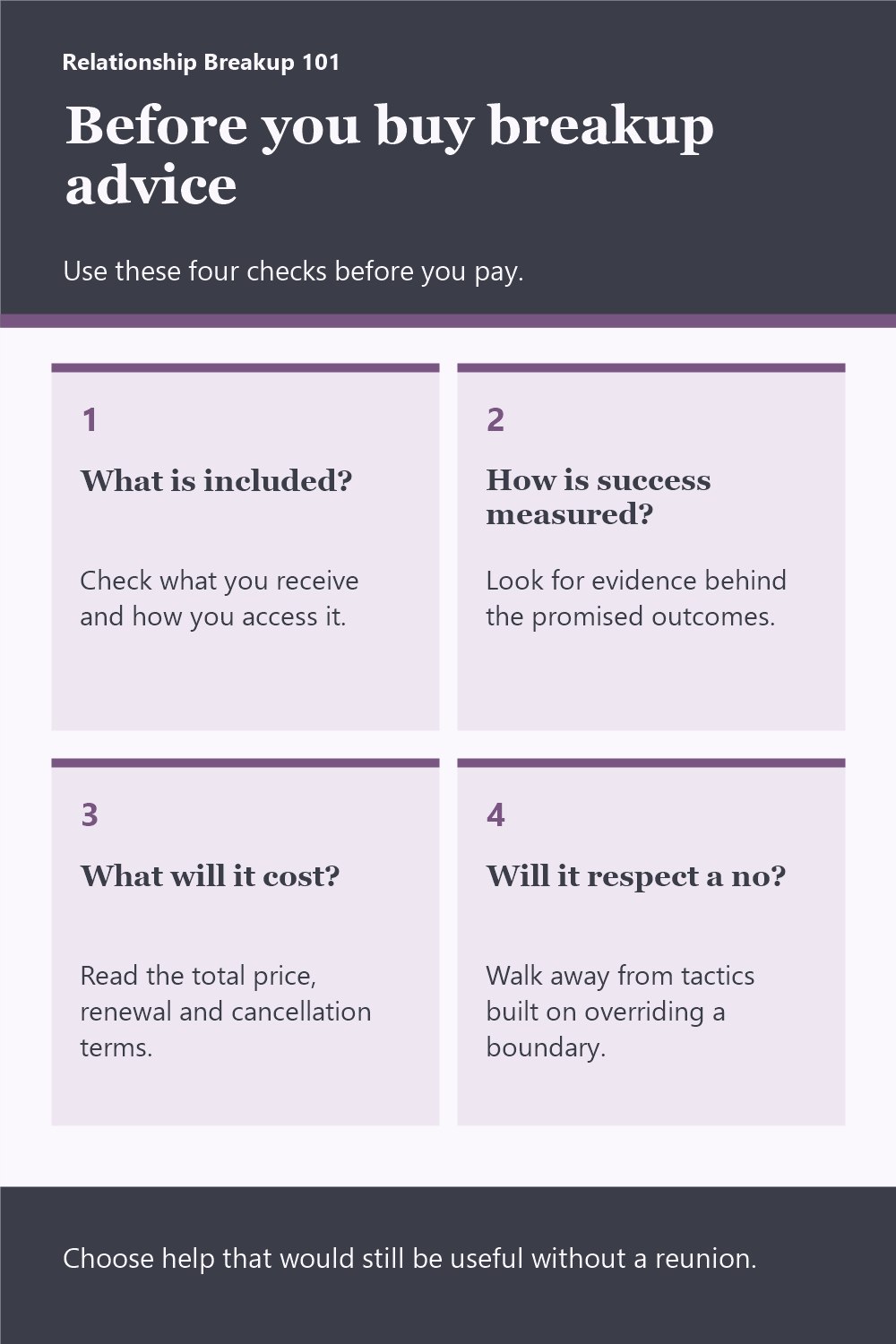
Read the infographic in text
Before you buy breakup advice Use these four checks before you pay.
- What is included? Check what you receive and how you access it.
- How is success measured? Look for evidence behind the promised outcomes.
- What will it cost? Read the total price, renewal and cancellation terms.
- Will it respect a no? Walk away from tactics built on overriding a boundary.
Choose help that would still be useful without a reunion.