

You may want to end a relationship and still care about how your partner feels. Consideration can shape what you say and how you prepare, but it cannot guarantee that the other person will feel comfortable, agree or be ready for the news.
The aim is to communicate your decision honestly and handle the next steps with reasonable care. You do not have to remove every difficult feeling before you are allowed to leave.
On this page
Separate concern about sadness from concern about danger
Worrying that someone will be upset is different from fearing threats, violence, stalking or retaliation. Think about what you have actually experienced and what support you may need. Do not dismiss a safety concern as simply being nervous about an awkward conversation.
If you feel unsafe, seek private help with planning before arranging direct contact. You can choose a call, a message, third-party arrangements or another approach suited to your circumstances. An in-person meeting is not a test of kindness.
Prepare enough to make the next step workable
Consider timing, transport, somewhere to stay and any immediate responsibilities. A breakup may affect children, pets, shared bills or belongings. You do not have to settle every detail before speaking, but know which issues need prompt attention.
Avoid waiting for a moment when nobody has anything difficult happening. Equally, do not rush yourself into an unsafe departure just to meet a rule about acting quickly. Preparation and support can be practical parts of following through.

Use a short message without false reassurance
You might say, “I have thought carefully, and I do not want to continue as partners.” Add a brief explanation if you want to, keeping it connected to your decision rather than making a case about every fault.
Do not promise a future reunion, immediate friendship or continued emotional availability merely to soften the news. If you mean that the relationship is ending, describing it as a break can leave the other person expecting something you do not intend.
Allow a response while keeping your boundary
Your partner may be sad, angry, relieved, quiet or uncertain. You can acknowledge what they say without trying to control the reaction: “I hear that this is painful. My decision remains the same.” There is no wording that guarantees a particular response.
If the conversation becomes repetitive, insulting or threatening, you can end it. You do not need to keep debating until the other person agrees. If someone threatens self-harm or appears in immediate danger, involve appropriate crisis or emergency support rather than promising to stay to manage the situation alone.
Handle necessary contact and support afterwards
Set a practical route for any remaining arrangements. You might use email for belongings or a trusted third person for collection. Shared parenting, housing or finances may need local professional advice; keep those responsibilities distinct from repeated discussions about the breakup decision.
Consider what support you need too: a friend to call, help with a task or time to rest. Caring about another person does not require being their sole source of comfort after the ending. You can be considerate and still keep a boundary that allows both people space to adjust.
Use one sentence to hold a limit gently
If the person keeps asking for another explanation and you’ve already told them what you can, you could say, “I know this is hard to hear. I’ve said what I need to say today. I’ll contact you about our remaining plans next week.”
You can give them room to feel hurt and decide how much conversation is appropriate for you. If you sense danger, use a safer way to communicate and seek support.
Read the infographic in text
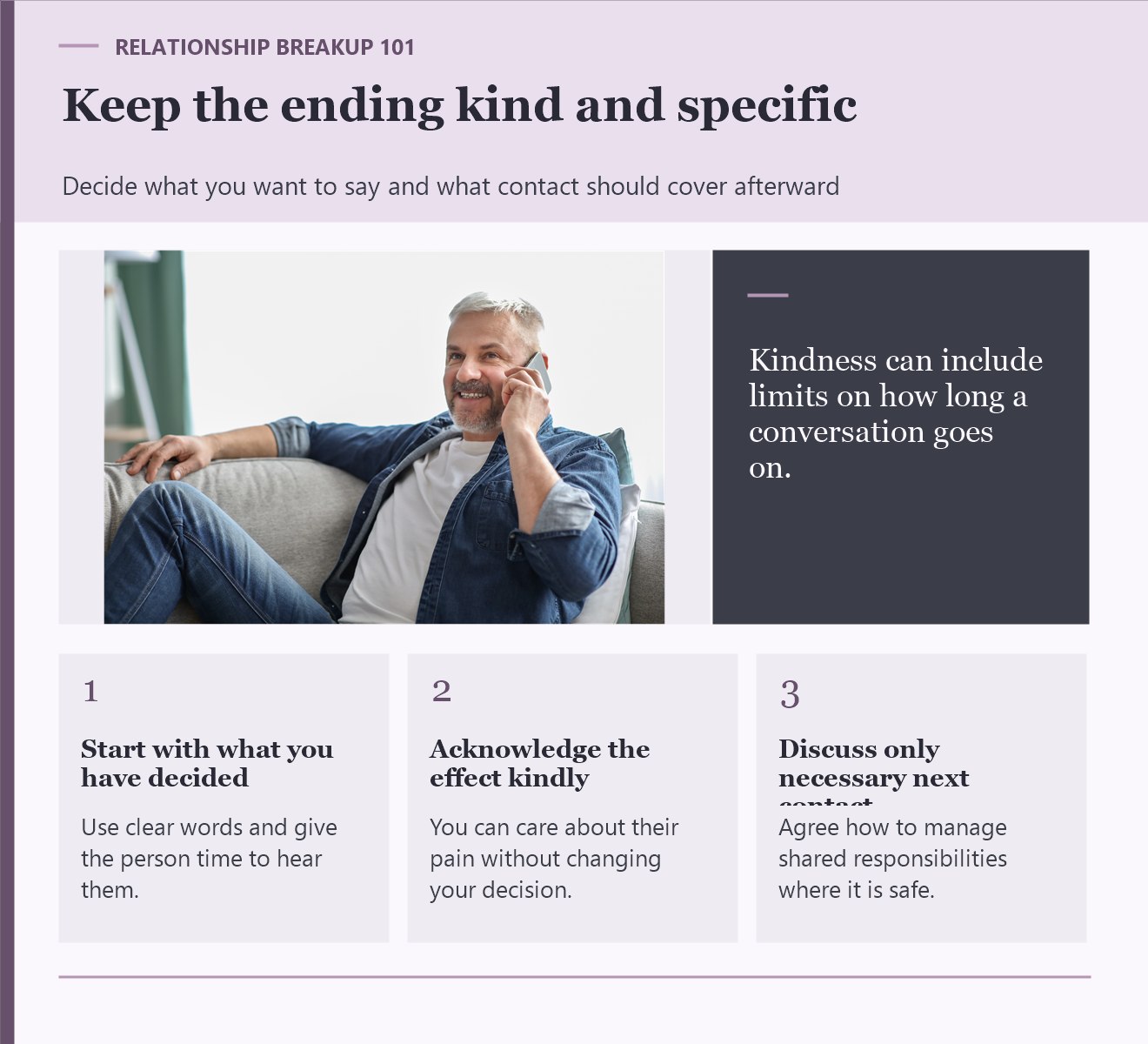
Keep the ending kind and specific
Decide what you want to say and what contact should cover afterward
- Start with what you have decided Use clear words and give the person time to hear them.
- Acknowledge the effect kindly You can care about their pain without changing your decision.
- Discuss only necessary next contact Agree how to manage shared responsibilities where it is safe.
Kindness can include limits on how long a conversation goes on.