

An engagement is a commitment you are allowed to reconsider. Wedding plans, family expectations and money already spent can make that difficult, but they cannot decide whether you want to marry.
You might need time to resolve a concern, a postponement, or an end to the relationship. Start by naming what you need, then make a practical plan. Calling off a wedding does not mean every financial or shared-life responsibility disappears.
On this page
Clarify whether you want a pause or an ending
What is troubling you: the scale of the wedding, an unresolved disagreement, a mismatch about the future or a wish not to continue the relationship? Write the concern in concrete terms rather than trying to label it as ordinary nerves or a sign of certain disaster.
If you want time, decide what that time is for and whether new planning or spending should pause. If you have decided to end the engagement, avoid presenting it as a brief postponement to make the conversation easier.

Prepare a clear conversation
If it is safe, choose a time when you can speak without an audience or an immediate appointment. A possible opening is: “I’m not willing to go ahead with the marriage. I know this changes our plans, and I want to work through the practical arrangements clearly.”
You may wish to explain your reasons, but you do not have to produce a verdict on your partner’s character. If you fear intimidation or retaliation, speak with a trusted person or specialist service before arranging contact. A private confrontation is not a requirement.
Map bookings before making more commitments
List the venue, catering, travel, accommodation and other bookings. For each one, note who signed, who paid, the next payment date and the cancellation or postponement terms. Ask providers for written confirmation of the options and any proposed charges.
Do not assume that every deposit is lost or that every payment must be refunded. Contracts and local consumer law matter. In the UK, the CMA’s cancellation guidance explains issues to check. Elsewhere, consult the relevant local consumer authority or adviser.
Give guests the information they need
Once you know the event will not go ahead, decide how guests will hear and who can help with messages. They generally need practical information about the cancellation, not a detailed explanation of the relationship.
You might write: “The wedding will not be taking place. Thank you for respecting our privacy. Please review any travel or accommodation arrangements you have made.” Do not promise reimbursement or flexibility from a provider without confirming it.
Handle rings, gifts and belongings carefully
Keep a clear record of items, payments and any agreement about returning things. If emotions are running high, arranging a later exchange or using a trusted intermediary may be more manageable, provided everyone’s safety is considered.
Ownership and repayment questions can vary by place and circumstances. Do not sell, give away or assume you must surrender a disputed item based on an online rule. Seek qualified local advice where there is disagreement or substantial value.
Make a plan for the life you share
You may already have a home, pets, care commitments or children together. Identify what needs attention now and what requires a separate conversation or professional advice. A cancelled wedding does not settle a lease, mortgage or parenting arrangement.
Agree on a practical contact method if that is safe and useful. Keep logistical decisions separate from pressure to restart the engagement. You can cooperate over a shared responsibility without promising to reconcile.
Allow room for grief and support
You may feel sadness, embarrassment, relief or several feelings at once. Find someone who can listen without turning your decision into family gossip or an argument about how much was spent.
Choose a manageable next step: one provider call, one trusted conversation or a quiet evening away from planning. You do not have to feel happy about the ending for it to be the decision you want.
Make one list for bookings and another for people
If the wedding is coming up, list vendors and guests who have a date-sensitive decision to make. Save the relevant paperwork and ask each provider for their policy in writing. If the list feels too long, ask a trusted person to help with a defined task.
Tell guests what they need to know about attendance or travel. You can share a brief statement about the event without explaining the reasons for the breakup.
Read the infographic in text
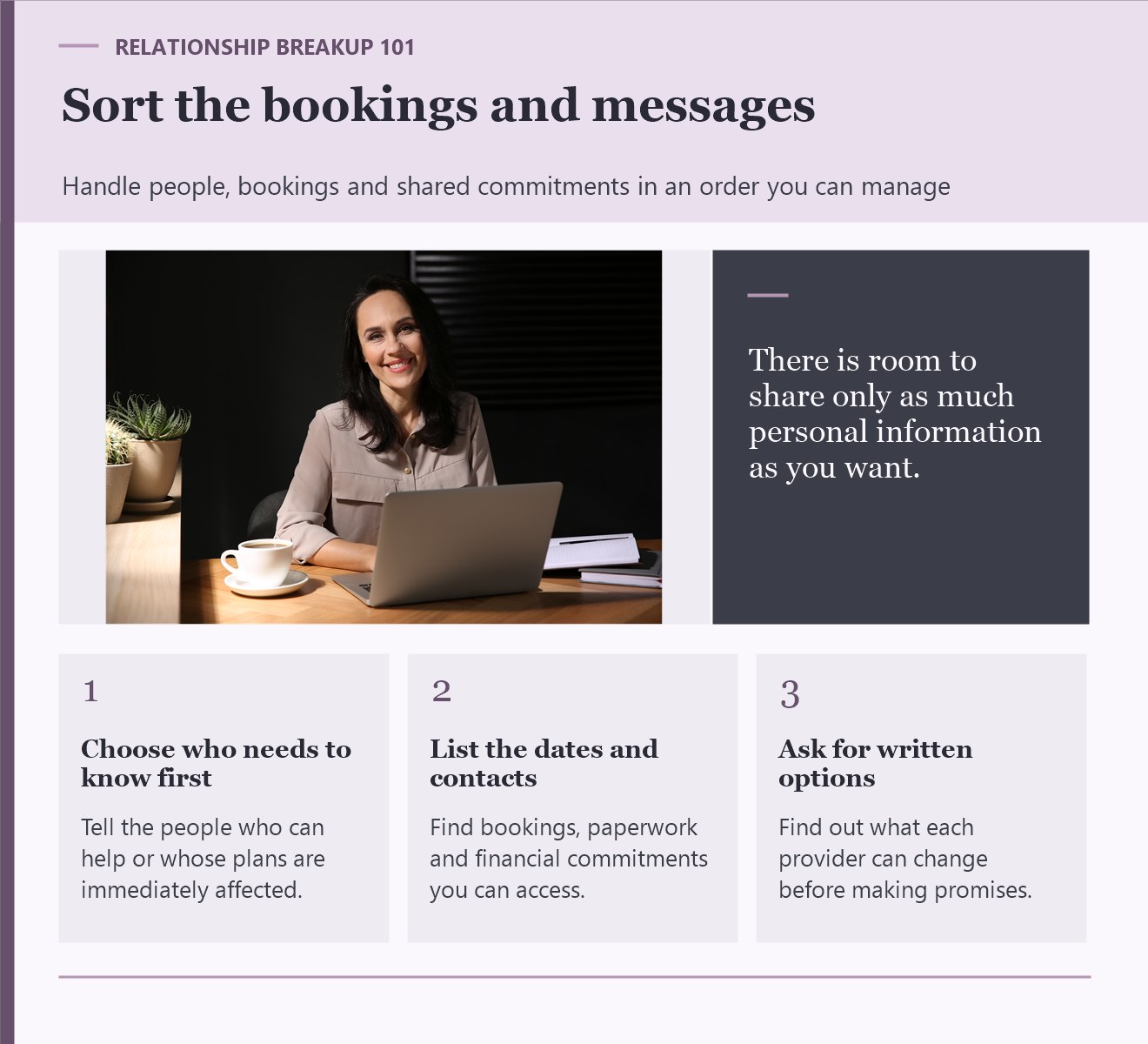
Sort the bookings and messages
Handle people, bookings and shared commitments in an order you can manage
- Choose who needs to know first Tell the people who can help or whose plans are immediately affected.
- List the dates and contacts Find bookings, paperwork and financial commitments you can access.
- Ask for written options Find out what each provider can change before making promises.
There is room to share only as much personal information as you want.